

What started as a conversation between parents has led to a large volleyball club with teams across multiple age groups.
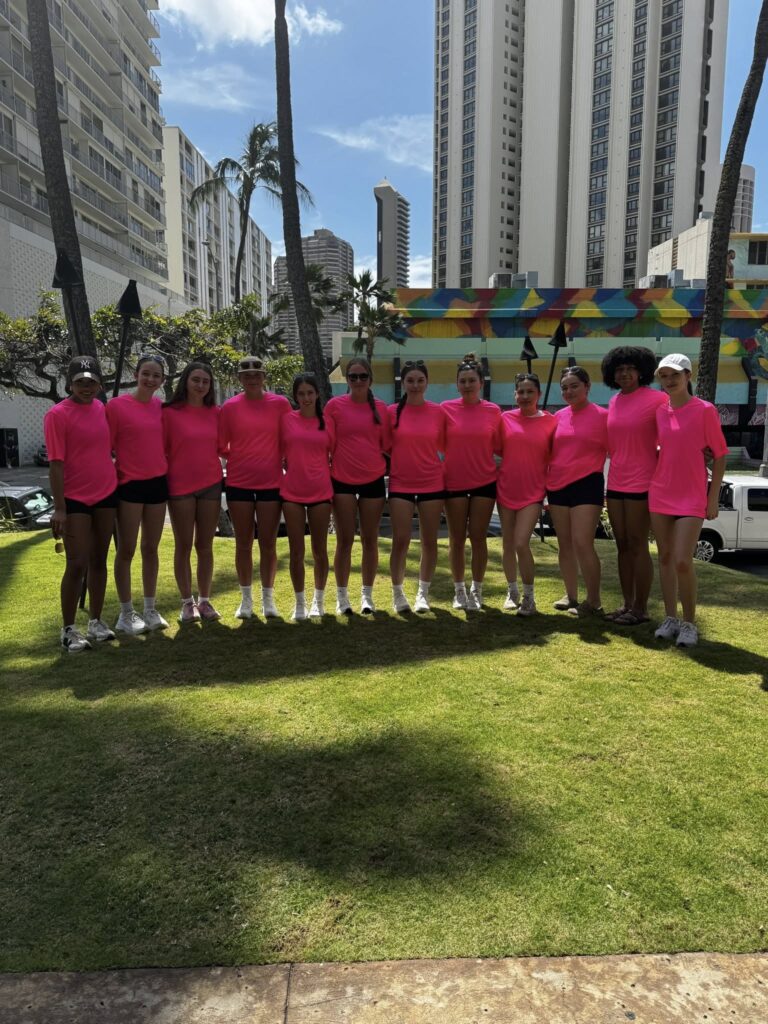
The Cobra Kings and Queens Volleyball Club has been giving young indigenous volleyball players the opportunity to show that they can compete with the best players from all over the world taking teams to Hawaii and Florida for tournaments.
Amy Wilson is a volleyball coach with roots in the Fort Frances area and is one of the coaches with the Cobra Kings and Queens volleyball club.
“It was two moms speaking in a vehicle that wanted to get a bunch of athletes together to go to the Alberta Indigenous Summer Games,” she said.
“It just transpired from there, it is community powered, meaning we fundraise a lot to get our Indigenous athletes to this tournament and from last year’s tournament, our Cobra Queens were invited to Hawaii to participate in the Shave Ice Cup, and our Kings were invited to the U.S.A.V. (U.S.A. Volleyball) Open Nationals in Orlando, Florida.”
Initially the hope was to get the teams to the Alberta Indigenous Games now they’re hoping to give athletes a leg up going into the future.
“The hopes were to get these two teams to the Alberta Indigenous Summer Games, and then make an impact where we would continue to build,” Wilson said.
“And this year, we went from two teams last year to six teams and a beach program this year, and it has become nation wide. So we are across Canada, and have athletes all the way from Newfoundland to B.C. that are participating in this upcoming season.”
The club has coaches from across the country who have been holding tryouts for the club.
“We have coaches that are indigenous across the country,” Wilson said.
“They’re holding tryouts across the country, everywhere from Newfoundland to Northwestern Ontario to Alberta, Southern Ontario, and B.C. So, yeah, we’re in tryouts, hoping to make our teams by the middle of April and then begin our training season until August.”
Athletes then spend training time as much as they can with other players from near where they live and then the teams get together to train ahead of competitions.
The Cobra Queens 17U team recently returned from competing in Hawaii, where they finished second after an undefeated preliminary round.
The club is also sending two teams, one male and one female, to the Canada Cup in Regina, Sask., this summer.
“I’ve always been a person who dreams pretty big, and it usually lives inside a notebook. This year, I’m really trying to take those and make them come to life,” Wilson said.
“So a couple months ago, I decided that I was going to reach out to Volleyball Canada and have a meeting with them and ask if we could get two Indigenous teams into the Canada Cup. So I had a meeting with them and they said, ‘absolutely.’ So we are sending two Indigenous teams from across Canada to the Canada Cup this summer, in July, in Regina. So it’s the first time ever in the history of the Canada Cup that two Indigenous teams will be playing.”
Wilson has been working with coaches across the country for some time through her own business Niigaanii (“one who leads”) Development Camps.
“I’ve met a tonne of indigenous coaches across Canada, as well as my time with the Ontario Provincial team and with Team Canada,” Wilson said.
“So I’ve built my coaching network that way, so when things like this happen, I kind of know who I would like to be involved with.”
Wilson is hoping to bring greater access in sport to Indigenous athletes.
“I think the biggest thing is trying to decolonize the sporting space,” Wilson said.
“A lot of times the athletes are coming from very remote indigenous communities, and they’re not always seen by high performance coaches. So the fact that we’re able to bring them off the community and have an opportunity to be seen and to possibly be recruited or play in spaces that maybe they haven’t been able to play in before is probably one of the most important things, giving them opportunities again that they might not get.”
Wilson hopes that the players can take whatever they learn, whether it’s through volleyball or classroom education they can bring it back to their home communities.
“What’s super important is to continue to be able to play sports after high school and get an education and bring that back to their community,” she said.
“So, ultimately, when they’re a part of things like this, whatever they learn in that circle, they bring back. And then it just keeps getting bigger. And our knowledge of volleyball in those spaces gets bigger, and then things like this get bigger, and before we know it, we’ll see more indigenous athletes on the national teams, which is super cool, I think.”




