



It was a hard pill for Jamie Davis to swallow. The fact that he was not a good swimmer chased him until he ultimately decided it was time to start taking swimming classes as an adult.
Davis, 35, runs a small plumbing business in town, and started taking swimming classes in November 2021 at the Memorial Sports Centre in Fort Frances.
“It took me a few years to even say I need to swallow my pride and admit that I’m a terrible swimmer,” Davis said, adding that safety was the main reason for taking the step.
Although Davis was comfortable in the water, having taken swimming classes as a child, his skills were not enough to warrant saving his or someone’s else’s life should the situation require it.
Drowning remains the third leading cause of accidental death in Canada, with an average of 338 people drowning in a natural body of water each year, according to a 2017 report by Lifesaving Society Canada.
The report also suggests that the greatest proportion of male drowning deaths occurred among young adults aged 20 to 34 years old, and seniors aged 65 years and older.
The body of water where people most commonly drown differs by age group, the report states, and adds that middle-aged adults most commonly drown in natural bodies of water such as lakes and rivers.
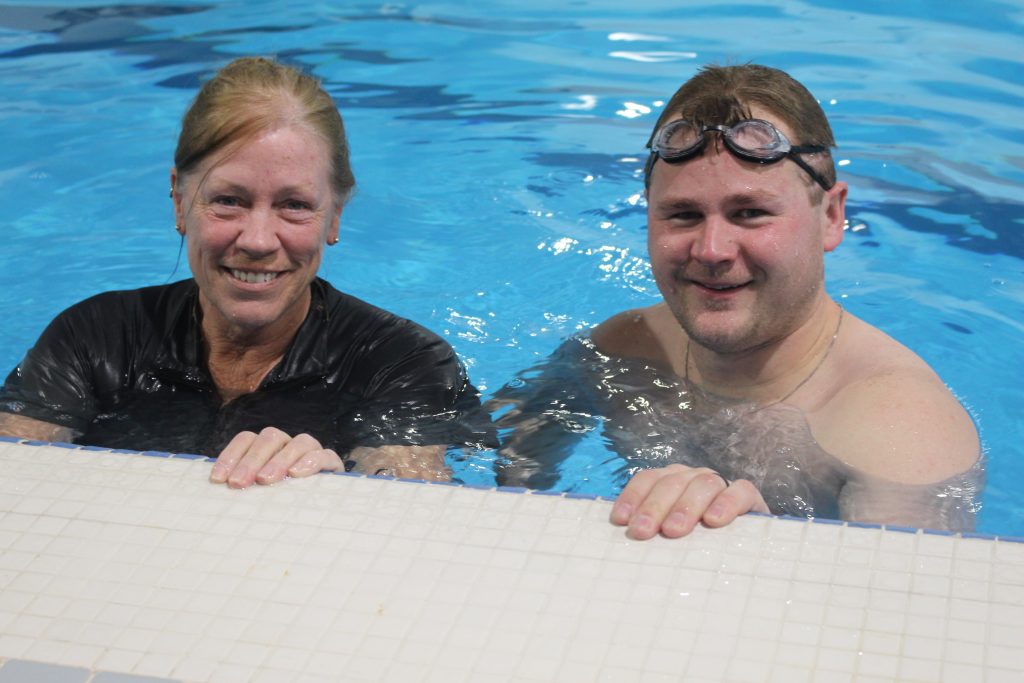
Debbie Murray, Cyclones head coach, water safety instructor, examiner and mentor, has been teaching swimming to adults and children for 35 years.
She has been Davis’s instructor since November.
Murray said most of her adult learners come because they are curious about a skill they did not have the opportunity to learn.
“A lot of adults here too have been on the lake their whole lives and understand that they do not know how to swim,” Murray said. “The desire to keep themselves safe is mostly what brings people in.”
Murray said adults come with their own set of goals that they are looking to achieve. Some even come with a previous negative experience from being in the water, whether in a manmade or a natural setting. On average, it would take an adult with previous swimming experience a few months to fine tune their skills along with learning water safety techniques. Requirements for each adult are different, nonetheless.
As an instructor, Murray said she has to understand the mechanics of what might have frightened an adult by discussing those fears and bringing them back to the basics of swimming.
Murray said she believes that swimming is an essential skill, no different than learning how to cross the road, paying bills and driving a car.
“We’re certainly exposed to more water because of our geographic location,” she said. “You want to have those skills so that if you need them, they’re there and available. It allows you to enjoy the water and enjoy the activities that most people, if they don’t know how to swim, will avoid or just sit and watch.”
With more than three decades of teaching experience under Murray’s belt, seeing progress with her swimmers is what keeps her motivated. Thus far, she has not lost hope on anyone, adding that it takes a strong person to look their fear in the eye, particularly around the water because it’s a real realization that something bad could happen.
Trust is also important between the instructor and the student. Murray said it is achieved by clearly demonstrating that you’re there for them, that you understand their goals and that you will keep them safe.
Murray said nobody wants to admit they cannot swim, and that is how they wind up in trouble.
“People that drown get into situations where they’re embarrassed,” Murray said. “And they know they don’t have the skill set. But they take that chance. People don’t drown by choice. They drown because of incidents and things leading up to it. There’s excellent swimmers out there too, that can drown if they’re not smart, with water safety.”
Davis said although swimming was a bucket list item that he wanted to cross off, the urgency increased when he and his wife had their first baby a year and a half ago. Now that they are expecting their second baby, Davis is happy to see how far he has made it since November.
Davis added that nobody is too old, and it is never too late for someone to learn swimming. With a 30-minute commitment per week, Davis said it is very achievable and flexible arrangements can be made with instructors at the sportsplex.
“I would understand if somebody felt a little bit ashamed or embarrassed,” Davis said. “But I think you’d feel more ashamed or embarrassed if you were put into a situation where you needed to possibly save your life or somebody else’s and you couldn’t do it because you didn’t have those skills in the water that you would need. It’s really a no-brainer at that point.”





