When the fire alarm woke Debbie Larson at Rose Manor on the morning of Sept. 22, she had not smelled smoke or heard anything unusual. But opening her apartment door revealed a hallway filled with black smoke.
“It was like a tire fire—black smoke thick through the hallway,” the Rose Manor resident told The Times in an interview.
Through the smoke she made out a man who appeared to be searching for a fire extinguisher before disappearing down the hallway. She put her own extinguisher outside the door, shut it again and pushed a jacket against the gap at the bottom to help keep smoke from entering.
“The second I opened up that hallway door, my apartment smoke detector went off,” she said.
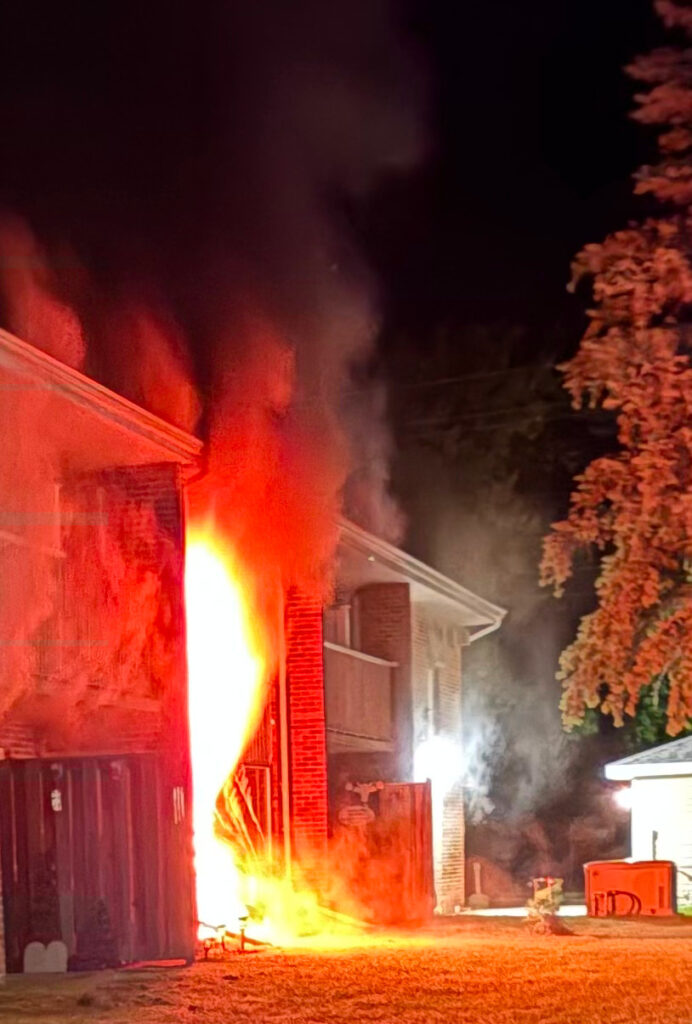
Emergency crews responded to the Sixth Street East seniors’ apartment building shortly after 5:20 a.m. to fight the fire that claimed the life of a 92-year-old resident and left the remaining tenants displaced.
Outside, Larson watched two neighbours trapped on their balconies throughout the ordeal. Firefighters could only reach them once the stairwells were cleared and ventilated enough. One was barely dressed. “It’s a good thing it wasn’t 40 below,” she said.
According to Larson, firefighters waited until conditions improved inside before bringing the resident down in a chair. She said the ordeal raised serious questions for her about emergency evacuation arrangements in a building housing older people.
She also questioned why the building’s fire alarm had not sounded sooner. Her account reflects what she experienced that morning, not a finding that the alarm system malfunctioned. The circumstances of the fire remain under investigation.
The effects of the blaze have lingered long after the flames were extinguished.
Afterward, Larson stayed in a motel room facing a schoolyard. The first morning, the school bell rang. “It sounded exactly like the fire alarm in the hallway,” she said. “I just about jumped out of my skin.”
Larson later returned to her apartment while restoration workers removed belongings, an experience she described as strange and painful. She spoke of neighbours who had lost possessions gathered over decades, “Losing a lifetime of belongings at this age in life is so hard,” she said.
Larson is now staying with her son in Kenora, where he has prepared a space for her in his basement. She is arranging a transfer at work and searching for somewhere more permanent to live.
“I’m far more fortunate than a lot of the other folks were,” she said. “I’ve got a roof over my head and a good kid.”
But leaving Rose Manor has meant leaving an established life and community.
“That’s my home, that was where I live, that’s my community, I have all my friends there,” she said. “I was very happy with my life.”
Her worry now extends to former neighbours who don’t enjoy the same family support. “I can’t comprehend how these folks must feel that really don’t have anywhere to go,” Larson said. “How hard is it for someone who’s almost 80 years old to go and stay with a stranger?”
The District of Rainy River Services Board (DRRSB), which operates the 35-unit rent-geared-to-income building, confirmed that 31 tenants were displaced and approximately 20 remained in hotel rooms it arranged as of Oct. 13.
The board expects insurance funding for that accommodation to be exhausted on Nov. 15. Chief Administrative Officer Charene Gillies told The Times the policy has a dollar cap, while the board’s existing vacant units are insufficient to meet all displaced tenants’ housing needs.
“We’re certainly exploring all opportunities,” Gillies said of efforts to find alternatives. DRRSB has appealed to private landlords and property owners for suitable accommodation and says it cannot yet estimate how many residents will need housing after Nov. 15.
Rose Manor is not expected to reopen before next year. DRRSB says tenants who wish to return will receive priority consideration, although details of future occupancy and rent-geared-to-income eligibility remain unresolved.
Although Larson praised community agencies that have been helping residents, she worries that vulnerable seniors have been overlooked.
“It’s like these seniors are invisible,” she said. “But I don’t care. I’ll rock the boat.”
For Larson, returning is not simply a question of whether repairs are completed. She wants to see the building again and decide whether she can feel at home there. “At that point, at that time, I would make my decision: either yes, I’m moving back in, or I just simply cannot,” she said.
For now, she remains in Kenora, grateful to be safe but still grieving the community she left behind.