

Students in Andrea Coyle’s Grade 1-2 class at St. Mary’s School recently completed the FAST Heroes program, helping them to learn what stroke symptoms look like and what to do when they see them—lifesaving skills that could save a friend or family member.
Natalie Veldhuisen, a community stroke prevention nurse with Riverside Health Care, brought the program to the region.
“It’s a new-ish program, and the idea is for them to recognize signs of a stroke in their grandparents, because a lot of times grandparents are watching the kids, and they’re the highest-incident age at which strokes would happen.”
The students spend about an hour per week on the program, which looks to engage them at their level, teaching them what to look out for, how to help and when and how to call 911.
“It’s a five-week program, and they learn it for about an hour each week. It’s kind of an animated cartoon setup, and they have little activities, and each week they’re learning a symptom of a stroke. Thunder Bay has done it, and it’s growing across Canada; it’s actually global.”
The program originated in Europe and has spread throughout the world, according to its website, fastheroes.com.
“The FAST Heroes school-based campaign was developed by the Department of Education and Social Policy at the University of Macedonia and has been made possible by support from the Angels Initiative. The Lions Club International is the official implementation partner of the campaign. The FAST Heroes campaign is endorsed by the World Stroke Organization,” the site says.
The name is derived from an acronym representing key stroke-recognition cues: Face, Arm, Speech, Time.
“Our fun, engaging and interactive educational programme, primarily aimed at children aged five to nine years, teaches them about empathy and love, as well as providing practical lifesaving skills. Children are empowered with tools to help fulfil their mission of educating their grandparents. The campaign focuses on the unique bond between children and their grandparents, as the average age of stroke patients is around 70 years of age,” the site says.
“We know that grandparents are an especially important source of unconditional love, patience, and kindness for many children around the world. Given that stroke is one of the biggest reasons that children lose their grandparents to death or disability, we are essentially fighting for them to have more quality time together.”
At the end of the program, Coyle believes that the students all have a good grasp and would recognize the symptoms and be able to help if they’re pressed into service.
“I think they actually did a great job at understanding,” she said. “They can all tell me all the signs that you would look for, and I think it’s more so just seeing those signs and then knowing how to respond. The program kind of looks at them as heroes at the end, and looking out for everyone in our community, elderly people, but yeah, they liked it. It was very engaging for them.”
Veldhuisen is hopeful to get more schools and classrooms on board with the program next year, noting that it was nice to be able to do it in the St. Mary’s class in June as it’s Stroke Awareness Month across Canada.
“I was really excited to get the teachers on board to do it,” she said. “No teacher wants to add to the workload, no. So, kind of talking, and then with June being Stroke Month, I thought, what a great time to do it.”
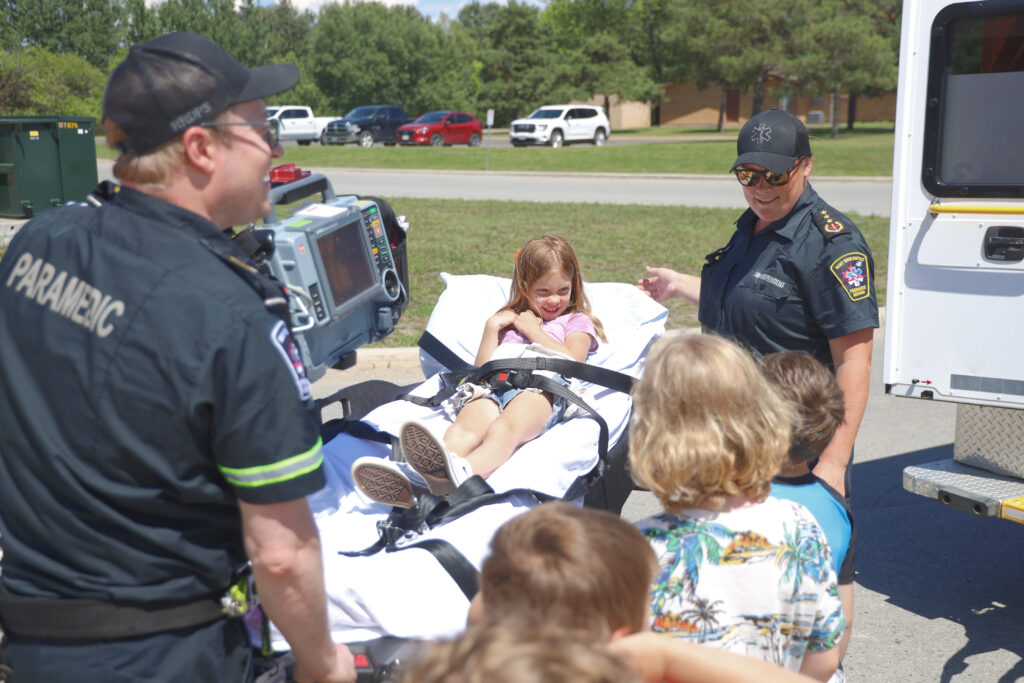
As a culminating event on Thursday, the Rainy River District Paramedic Service was able to bring one of its ambulances to the school, giving the students the opportunity to see the vehicle and meet some paramedics as they might if an ambulance were required in the case of an actual stroke.
Coyle said she’d recommend it as an option for teachers.
“I thought it was a great end to the year too, and especially this activity as a culminating activity was it’s great for them,” she said.
Any teachers interested in bringing the FAST Heroes program to their classroom can contact Natalie Veldhuisen at n.veldhuisen@rhcf.on.ca.




