


Local gardeners are working together to provide native plants suitable for the pollinators in the region to feed on as they pursue their migratory patterns.
Lindsay Hamilton is a local gardener and member of the Rainy River District Stewardship (RRDS). She is part of the group that has planted a native plant garden behind the Fort Frances Public Library Technology Centre (FFPLTC).
The small patch amid the field behind the library is surrounded by concrete and has had flowers popping up throughout the spring and as the summer progresses.
“All of these plants are considered native plant species to North America,” Hamilton said, showing off the garden. “You can get really into it and get into native plants specific to ecoregion. But if you’re going to start out, you don’t want to intimidate people to think specific.”
Hamilton got into the idea of native plant gardens as part of the David Suzuki Butterflyway project. “The Butterflyway Project is a citizen-led movement growing highways of habitat for bees and butterflies across Canada.”
There are a few principles to follow when planting these native plant gardens to make them the best fit for the pollinators they’re meant to help, according to Hamilton.
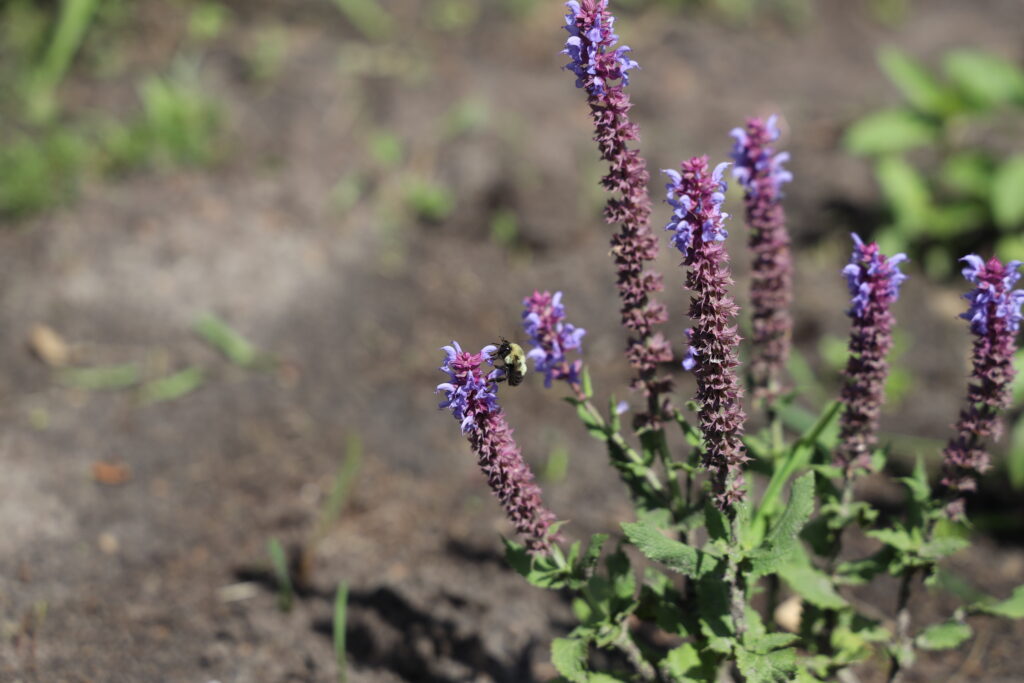

“The idea when you’re planting native plants is that right from the beginning of the winter melt into early springtime you have a continuous some type of habitat and some type of food source and mating source because that’s when pollinators start to emerge,” she said. “So when you’re planning a native plant species garden, you need think about the entire season and having a blossom throughout or having food source throughout all the way into the first frost,”
Some pollinators need to feed early in the growing season. Hamilton described the behaviour of the Mourning Cloak Butterfly which actually hibernates.
“There is a butterfly called the Mourning Cloak Butterfly, they actually hide behind the bark. They emerge really, really early like before the snow melts and they [feed on] birch nectar or the birch water that runs, and the earliest sort of spring buds on a birch tree so they’re pollinators not just the plants, but they also like trees are a big source of their support system as well,” she said.
The garden on the Second St. side of the library is in addition to the other work that RRDS does with the FFPLTC. They’ve partnered together to plant the trees at the back of the library property which Hamilton says are all native plants to the area. Given that the RRDS already has the tree project near the library it made sense for them to work on the garden in the same area.
To have a pollinator friendly garden or even small patch in an existing garden, it doesn’t take a lot of space. For Hamilton the biggest challenge was getting the plants to grow from seeds in the right conditions.
“So the most challenging piece that I’ve found so far is that native plants growing from seeds is difficult because most native plant species, to start from seed, need something called cold stratification. So you either need to plant your seeds in the fall so that they get cold enough, they have to have a certain amount of time at a certain sub zero level,” Hamilton said.
She says she tried to cold stratify a few seeds in a milk jug over last winter but the erratic temperatures last winter didn’t seem to do the trick. Many of the plants in the patch behind the library are transplants from other gardens.
“A lot of these, I think the crew that we had planting had these already established in their garden, and these are actually transplants, and they seem to establish better,” she said. “The thing about native plant species gardens too, is that they will thrive on their own, they take barely any upkeep because they’re meant to be here, they want to be here so they thrive and they don’t need a lot of watering or soil alteration, if anything some of them will thrive on neglect.”
Some of the flowers in the garden patch behind the library are Canadian Anemones, Black Eyed Susans, Sage, Bee Balm/Wild Bergamot, Milkweed, Yarrow, Echinacea and Blazing Stars, among others.
There are a lot of other options to include in a native plant garden and prospective gardeners should look into the options for themselves.
Hamilton’s hope is for the Fort Frances area to become a Butterflyway. Which means there are 12 or more pollinator-friendly garden patches registered with the project in close proximity.




