


Now more than ever gardeners have choices when it comes to helping to keep pesky weeds and annoying pests out of their beloved gardens. There are myriad commercially available aids that will help to ensure the only things in your precious vegetable patch are the delicious veggies that are supposed to be there. However, before you reach for the products laden with potentially harmful chemicals, consider these alternatives that will help to keep your veggies, garden, family and the environment safe and contaminant-free this summer.
Weeds
For stubborn weed growth, nothing does the trick like a good afternoon on your hands and knees pulling those pesky blighters out by the root and tossing them into the green bin. Not every gardener has the time or patience for that task every single day, and so many times we’ll look for chemical alternatives to help us in our crusade. However, there are options that are much more environmentally friendly than harsh chemicals, especially when those chemicals might be applied to vegetables that will be gracing the dinner table down the road. Consider a salt and vinegar solution for your weeds. HGTV’s Mick Telkamp suggests a homemade mixture of one gallon of white vinegar, one cup of salt and one tablespoon of liquid dish detergent. The vinegar and salt help to draw moisture out of the weeds, and the dish soap helps to make sure as much of the concoction is absorbed by the leaves of the weed as possible. This is a surface solution however, as it is not intended to work on the weed’s root system, and so several applications may be necessary. It can also likely harm plants you’re not looking to be rid of, so a narrow applicator will be necessary to avoid harming your favourite tomato plant.
While the previously mentioned spray can be effective at killing existing weeds, those with a weed-free bed that are looking to keep it that way can consider corn gluten meal (CGM). CGM is a byproduct of the corn’s wet milling process, which produces a dry powder that researchers at Iowa State University discovered is efficient at preventing the seeds of common weed varieties from sprouting, helping to keep grass and new weed growth from popping up in your garden. It is important to note researchers did not find any effect of CGM against perennial weed roots, nor against weeds that were already present and growing in your yard or garden. However, because it can keep seeds from sprouting, it can still be effective at keeping already existing weeds from spreading further.
Pests
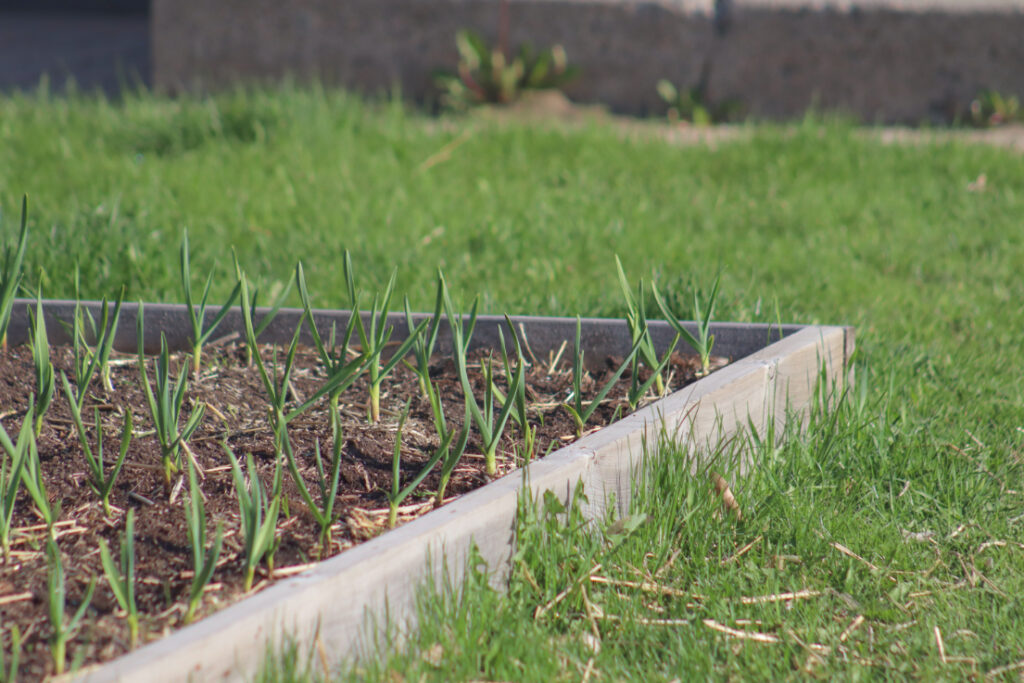
No one likes their garden covered in pests like bugs and beetles that will chow down on your veggies before you ever get the chance. To help keep them under control or eliminate them, consider first off what you plant in your garden. Several different varieties of herbs, vegetables and even flowers have shown to be effective at keeping pests at bay, including garlic, onion, fennel, sage, thyme, parsley and French marigolds. Once your garlic is ready for harvest, you can put a portion of it back to work for you by concocting a bug repelling garlic spray by combining one quart of water with 2 teaspoons of garlic juice, one teaspoon of cayenne pepper and one teaspoon of liquid dish soap in a spray bottle. Minced garlic can also be spread around tulip bulbs to discourage snacky squirrels.
If you’re dealing with aphids and your local ladybug isn’t up to the task, you can create a banana peel repellent that will deal with your aphid problem while also helping strengthen flower blooms. To do this, simply place the peels around your roses or other aphid targets to repel them while the potassium from the peels will help to nourish the flowers down the road. Meanwhile, if you’re sick of wasps buzzing around and making a nuisance of themselves, some say that lemongrass placed in a vase on a picnic table will keep your airspace free from the pesky menaces.
Finally, there is no shortage of deer in and around town ,and anyone with a garden knows that those critters love nothing more than to chow down on any plant, flower, vegetable or fruit they can smush their snouts into, To keep those long legged vagabonds out of your gardens this summer, consider planting strong-smelling greens, such as garlic, onions, lavender or mint in your garden to help deter the deer. Another take on the same principle says to hand chunks of strong smelling soaps on a line around your garden area (think Irish Spring or Zest) in order to trick the deer into thinking a freshly showered human is lurking nearby, or hang loud, surprising ornaments around to frighten the deer away. There may also be potential in leaning on the fiery capsaicin, the active component in hot chili peppers, in order to teach your neighbourhood deer a lesson. If the human tongue can struggle with the burn after a plate of hot buffalo wings, spraying some plants with a solution of two teaspoons hot cayenne powder, one quart of water and one teaspoon of liquid dish soap might get their tongues wagging in such a way they’ll think twice about dining at your house again the following night.
If all else fails when it comes to the deer though, the best solution might be finally fencing in that precious garden. It might not look as nice, but when you go out each day to harvest another tomato, a plastic fence is much more pleasant on the eyes than trampled and chomped on plants… or what’s left of them.




