



Fiscal responsibility: Getting value for taxpayer money
For incumbent Councillor Steven Maki, the question at the centre of many municipal decisions is a straightforward one: what is the town getting for its money?
If voters send him back to council on Oct. 26, he already knows where he’ll start.
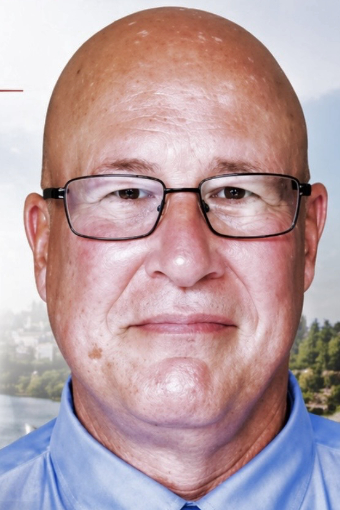
“If I’m re-elected, I will, at the very first council meeting, put a notice of motion forward to direct administration to go ahead with the traffic light scenario,” Maki told The Times.
In May, council voted to build a roundabout at the Central Avenue intersection but rejected the only bid for its design, then withdrew its application for provincial design funding after missing a deadline, leaving the question of roundabout vs. traffic light update to the next council.
Seeking a second term, Maki lists fiscal responsibility as first among his five priorities, ahead of community growth, housing, transparency, and community services and infrastructure. He is one of nine candidates for six council seats.
Maki moved to Fort Frances in 1981 to become a police officer, spending 23 years on the job before joining the local GM dealership. His community work has included helping coach Muskie football, two stints on the Committee of Adjustment and a term as Kiwanis Club president.
He first ran in 2022 after watching a council that seemed to be “doing more internal fighting than anything.” Four years on, his motivation for re-election is more optimistic. “I think there’s a lot of good that is going to be happening and I can be a part of that,” he said.
His approach to decisions starts with cost, alternatives, need and long-term benefit. “It all comes down to money,” he said. “I pay as much for property taxes as my brother does for his place in Kelowna, and his place is valued at least three times the value of my property.”
That approach has been most visible in his opposition to the roundabout. The intersection’s signals are past their useful life, and the town says a study it commissioned weighed new signals against single- and double-lane roundabouts, recommending a roundabout for traffic flow, safety, pedestrian accommodation, truck movements and lower long-term maintenance costs.
It currently estimates costs to be roughly $4 million for a roundabout and $3 million for signals, with up to 90 per cent of eligible construction costs potentially covered by the province.
Maki argues the town’s share could be far higher. In a campaign video, he cites study estimates of $3.4 million for lights and $4.7 million for a two-lane roundabout, each plus or minus 25 to 35 per cent. Assuming a 30 per cent overrun and the limits of provincial funding, he calculates the roundabout would cost the town roughly $1.2 million more than new lights.
“I’m not saying roundabouts are wrong… this is a dollars and cents issue right here, and we don’t have money to throw out the window,” he said. “We’ve got potholes in the streets that you need to put your truck in four-wheel drive to get out of.”
That willingness to challenge staff recommendations shapes how he sees council’s role. “Our job is not to rubber-stamp administration’s plans; it’s to ensure that they are doing what’s in the best interests of the community,” he said.
Among this council’s successes, he counts a better relationship with First Nations communities, though he admits “there’s still work to be done.” He also believes the town keeps residents better informed than past councils did but says communication between administration and council “could be and should be” stronger. “And we’re working on that.”
On housing, he points to possible apartment development, including at the Shevlin Wood Yard, but acknowledges construction costs and affordability pressures are more than a municipal council can solve alone.
The biggest challenge ahead, in his view, is attracting industry and the high-paying jobs that come with it. “We don’t have a paper mill. Not likely we’re going to have a paper mill back here ever again,” he said. He wants the town to market its location, rail connections and low energy costs more aggressively. “Why are we not promoting all of that?”
Four years in, his biggest frustration is the pace. “I thought you could get stuff done a little quicker than I found out can actually happen,” Maki said with a chuckle. But he appreciates the debate behind that pace to be a part of the job: “I’m a team player. You can certainly have a differing opinion, but when the decision’s made, get on board.”
For Maki, a second term would mean asking the same questions: what the town needs, and what taxpayers can afford.
“The buck stops with us,” he said. “If the people don’t like what we’re doing… they can fire our butts.”




