Bringing big-project experience to tackle housing and drive economic growth.
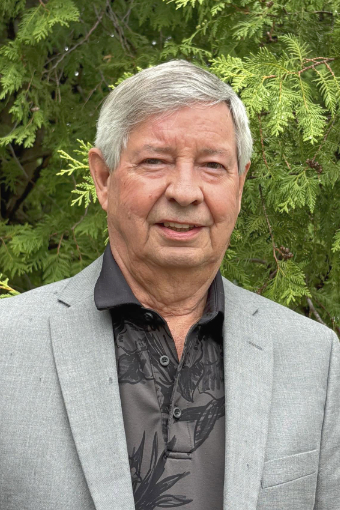
With multimillion-dollar projects under his belt and a drive to build a better community, Brent Calder has put his name forward to be the next mayor of Fort Frances with a promise to prioritize development and improve access to housing, all while finding new ways to be fiscally responsible.
Fort Frances-born Calder has been both a business owner and has worked at the helm of a number of large-scale, multimillion-dollar projects across the oilfields of Canada. Through running those projects, Calder said he’s developed significant operational and fiscal management skills that he is now looking to take to the mayor’s seat to help improve the Town of Fort Frances and the lives of its residents.
“I was solely responsible for all these projects, and so the one project had 1,600 employees consisting of professional people like accountants, engineers, medical personnel and safety personnel, plus tradespeople,” Calder said.
“When the mill went down, I ended up hiring about 25 tradespeople from Fort Frances, trying to help them out. So as far as being a stranger to any of that, running megaprojects like that, they give me a chance to show off my leadership skills, the financial management, and I think that’ll be quite a benefit for trying to do economic development in the town of Fort Frances.”
One of the projects to which Calder would like to bring that experience is development of the seniors’ housing project at Shevlin Woodyard, the long-gestating property in the East End of Fort Frances that he said needs to be remedied to capitalize on a number of pressing town issues, including housing.
“The town’s owned it for over eight years; we’ve had a chance to get that piece of property ready. There are people knocking on the door that would like to build there, put businesses there. It’s a prime piece of property in the town,” Calder said.
“And I’m sorry to say that the town of Fort Frances has not been ready to accept the individual companies for coming in to build on that property. That’s one of the top priorities for council and mayor, is we’ve got to get that property ready. Environmentally, if there’s a problem there, I think we have to tackle that part of it. I think with the 24-unit apartment block, well, actually I’m hoping the company’s going to keep on waiting. They’re willing to spend $11 to $12 million on one of them, but they’ve been waiting two years already. So I’m hoping we haven’t scared them off, and that’s going to get rid of, in a temporary way, our housing crisis.”
Calder pointed out the ongoing housing crisis in town as another key component of his run for mayor, noting that even the surrounding First Nations communities have brought up a lack of housing in the wider district as a key issue, especially as it has a knock-on effect for potential industry and job recruitment in the area.
“How do you expect to do economic development if you don’t have any houses for the professional people?” Calder asked.
“For instance, as the First Nations people are doing economic development on the biomass, or the solar farms they are talking about doing, and some of these have started already. We have to make sure that we’re ready to help them. That kind of goes into reconciliation. It’s kind of hard to try to take somebody’s land away, and then a year later, you want to put your arm around them and do reconciliation. I’m a First Nations person; I’m from Naicatchewenin, which is part of Agency One. I just recently had a meeting with the chiefs of Rainy Lake and the Agency One personnel, and the number one thing question that they asked me is, ‘What are you going to do for housing?’”
Calder said he’s been told that some businesses or industry, as well as professionals such as teachers, have shied away from Fort Frances due to the lack of housing, which he said is crucial to address if the town is going to be able to recapture lost population and tax base. He said he’d like to see the town make it easier to get started on building new property.
“I think we got to open up some of the areas on it,” he said.
“I’ve already talked to contractors, and they’re willing to build houses. The only thing is, one contractor came to me and he said that they want from $80,000 to $100,000 for some of these lots and stuff like that. I think the vacant land is not making us any tax dollars. So we have to open that up a little more. I don’t think we should give them away, but we have to make sure that the contractors, we’ve got to help them out a little more.”
In order to attract that new business and industry to town, Calder sees an opportunity in a demographic that already comes to town, at least once or twice a year. By positioning the Town of Fort Frances as a place to build, supported by infrastructure and a supportive housing supply, the municipality could make a strong case to visiting Americans who come up through town for the summer, many of whom Calder said are business owners themselves, and thus could potentially be wooed to invest in the district.
Calder also noted he feels that there could be a more collaborative approach to some lingering hot-button issues for residents, including the Sunny Cove Camp property, which he said he would like to see supported through community fundraising to help keep the cost down for the municipality, and pointed out such efforts have previously been successful for other town initiatives.
In all, Calder said he wants to see the town thrive, with new faces bringing new ideas, and he feels he’s the right person to help lead the way.
“What I’m running on is solutions for these ideas,” Calder said.
“I would think with a new council, and a new mayor for sure, that actually solving these problems, it’s going to be a challenge. But I think the town of Fort Frances, the council and the mayor, they should be moving on to new business, not looking after business that’s been on the books for quite a while. Fort Frances is still a great place to live. We just have to change a few things here and there, and hopefully by doing some of these things, we can retain the younger people. We can give them a reason to stay here and show them that we have housing and we have a possibility of jobs for these individuals.”