The recent hospitalization of a Brant-Brantford person with rabies — the first case in a human in Ontario in more than 50 years — has put the rare disease in the spotlight.
While little has been confirmed about the local case, which was announced by the Brant County Health Unit on Sept. 6, rabies is almost always fatal by the time it’s symptomatic.
But there are some cases where people have survived.
Twenty years ago, then-15-year old Jeanna Giese was sent to Children’s Hospital of Wisconsin after developing rabies symptoms in the weeks following a bat bite.
Dr. Rodney Willoughby, an infectious disease specialist at the hospital, didn’t have much expertise with rabies at the time.
“All I knew is that it was 100 per cent fatal,” he said.
Still, he tried an experimental intervention — now known as the “Milwaukee protocol” — and Giese survived.
The Milwaukee protocol has gone on to save the lives of 18 of the 130 people it has been used on, said Willoughby, who is not involved in the Brantford-Brant case, although he said he offered support.
The Spectator spoke with Willoughby this week about the protocol and how it works:
How did you get the idea for the Milwaukee protocol?
Learning he had a patient presenting with rabies symptoms, Willoughby began searching for whatever he could find on the virus.
He didn’t see much point in reading articles on how to treat rabies, “because no one had survived before,” he said.
But he found a lot of “near misses” — where it appeared people would have cleared the virus through an immune response, if only they had stayed alive long enough.
The problem was, the agitation of “furious rabies” caused cardiac arrest in many people, he said.
It became “pretty obvious” to Willoughby that sedating Giese — something hospitals do daily using anesthesia — could prevent that from happening, and buy the five or seven days needed for her immune response to kick in.
It seemed “almost too good to be true,” he said.
But it wasn’t.
The hospital assembled a handful of experts in various specialties — critical care, neurology, infectious diseases — and “none of us could see why it wouldn’t work.”
They read about studies by French rabies expert Henri Tsiang, who noticed that ketamine — “which is now mostly a street drug but still has its uses in medicine” — tended to reduce the virus in animals.
They got permission from Giese’s parents to try it, “and had a lot of sleepless days and nights as we tried to anticipate problems and stay on top of things,” Willoughby said.
It did the trick, and Giese’s body made an antibody to clear the virus, he said.
After a week, they started withdrawing her from the sedation and she went home virus-free, 76 days after admission. She was the first known survivor who hadn’t been vaccinated against rabies.
It was a long road to recovery. She has some lasting nerve and brain damage.
But Giese graduated high school on time, went to college, and is an active mother of three, passionate about rabies and animal education, according to her public Facebook page.
What is the success rate?
The event inadvertently changed the course of Willoughby’s career.
The protocol is coming up on its seventh iteration, and has been used on around 130 rabies patients since 2004, by different physicians globally.
The 17-page protocol instruction document recommends “aggressive sedation,” which is then reduced “aggressively” starting at day eight, and ideally finishing by day 12.
The document offers complications physicians may see, troubleshooting suggestions and tips picked up along the way. For instance, room temperature has “a major effect” in rabies and imaging is “particularly critical” during the second week with bat rabies to check for brain swelling.
The effectiveness and ethics of the treatment have been debated over the years.
But, it has worked for around one in five patients, “which is a lot better than zero,” Willoughby said.
With around 60,000 human cases of rabies a year around the world, Willoughby thought within a year, they’d have a large sample size and the Milwaukee protocol perfected.
“But there’s such fatalism about this disease that people don’t even try,” so “we continue to sort of trip over shoelaces and figure this out slowly,” he said.
Over the years, he has learned whether someone has had the vaccine, and which animal the contact is from are all factors affecting success.
There’s a “sweet spot” for the immune system for patients between about five and 50 years, and they’ve had more survivors infected by the vampire bat strain.
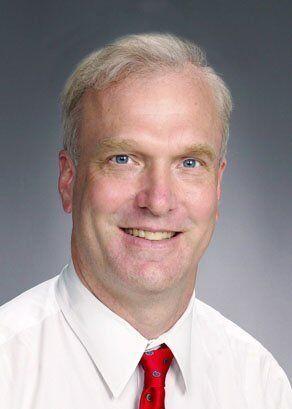
While Willoughby continues to monitor rabies cases and record statistics from other doctors attempting the Milwaukee protocol, he is excited by a gene therapy in development with Auburn University, which uses a virus to deliver an antibody through the bloodstream.
But even with hopeful advancements, Willoughby still says the best treatment is post-exposure prophylaxis.
If an unknown animal bites or scratches you, wash the wound with soap and water and talk to your doctor as soon as possible.
With the four-dose rabies shot, “you have essentially a 100 per cent chance of never developing rabies.”