

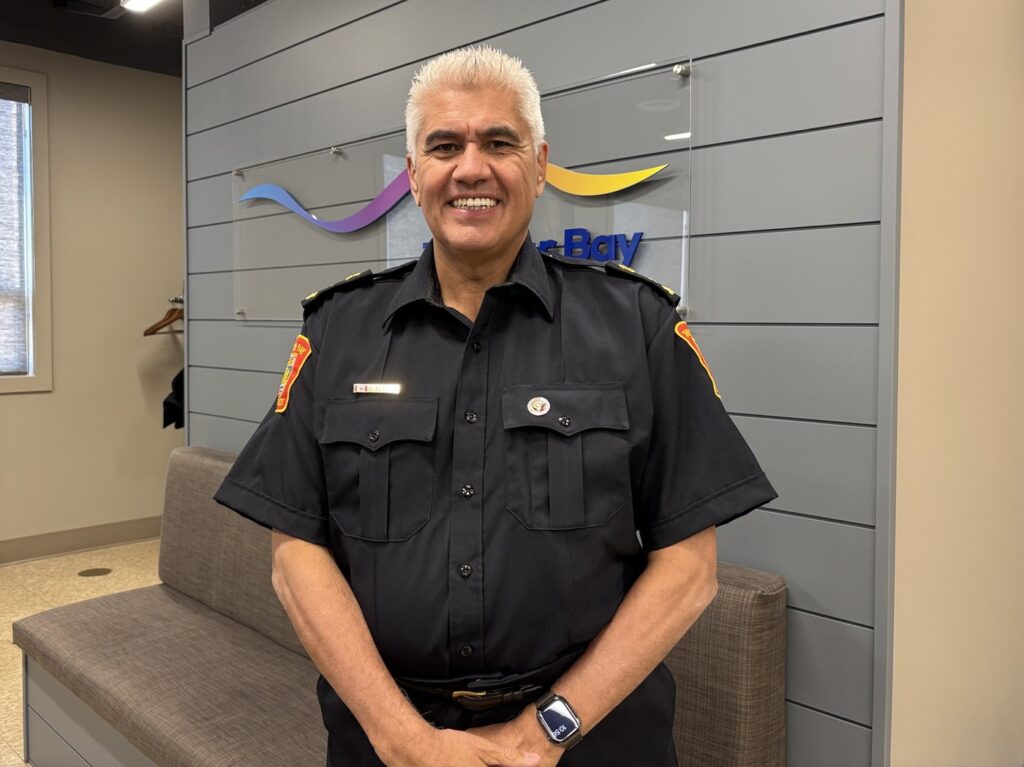
THUNDER BAY — Police Chief Darcy Fleury says despite a slight increase in the city’s crime severity index (CSI), higher reporting rates paint a more accurate picture of what’s happening in the community than statistics alone.
“People are reporting crimes, which is what we want to see. This is probably a good news story all around because what we’re looking at is the number of calls that come to the service. That’s up,” he said.
At the same time, the city has seen an decrease in really significant, dangerous cases.
“Right now, I think the message to the community is we have a very good clearance rate, so some of the volume is coming down on some of the more severe cases, which is a good thing,” he said.
He said that the 18.43 per cent CSI increase in incident rate is not a spike in dangerous offences.
The CSI for Thunder Bay has only increased by 3.1 per cent, he said, but the violent crime severity Index highlights a 7.44 per cent decrease compared with 2024.
He said this decrease between 2024 and 2025 highlights the TBPS focus on drugs, gangs and guns.
“That’s another area we still have our emphasis and will remain our number one enforcement priority,” Fleury said.
He said the metric of the Stats Can CSI report is volume-based, which will increase when more people report incidents, as well as when online-reportable incidents continue to rise as more residents use accessible reporting tools.
Taken together, he said, these indicators show that while incident volume has risen, the severity of crime has not, and investigative outcomes continue to improve.
“We have a very hard-working service. We’re seeing results and really getting momentum into the work that we’re doing here,” he said.
Fleury said that what he’d like going forward is to be a more proactive rather than reactive police force.
“We do have some things in the works that hopefully in the next year or two we’ll be able to put out there that is going to help with some of these more proactive pieces,” he said.
One of their programs they’ve seen success with, he said, is Project Support. This is important for getting people “in contact with the different agencies, making sure that everybody’s engaged and really trying to find the best way to help people live a different lifestyle.”
Crime prevention, he said, is huge, and mostly effective when you can implement it to the younger members of the community.
This includes finding ways to help young people so they don’t get involved in any kind of criminal activity.
The chief said it’s important to reach out to young people who, for example, may be living an unhealthy lifestyle to create an intervention piece to give them the best advice.
“That’s where our social navigator (as part of Project Support) is really important, those kinds of roles where they can contact and say, look, what can we do to help you live a better lifestyle because this is the damage it’s causing to you and to your family and to the people in the community.”
He said school programs are also an important part of the crime prevention and awareness piece.
Unfortunately the reality in Thunder Bay can be troubling for some youths.
“There’s a lot of money to be made in that (drug) trade here, and you know that goes maybe to some of the awareness pieces.”
He said the challenge for the TBPS and other local agencies is to get the message out for people to avoid the temptation of the drug trade.
“You can make money, but you’re going to live a lifestyle that’s not healthy at one point or another. The stress, the anxiety for people that are engaged in that type of behaviour, it’s not healthy, and we don’t want to see people going on that path.”
That’s one of the reasons, he said, we’re seeing people that are coming here from outside or people that are engaged in it. “It is profitable and it’s sad that’s the reason they’re coming, but that’s reality.”
The community outside the police force also have roles to play, he said.
“Agencies being funded appropriately and being able to do the things that they need to do in the community, the other social agencies, other health agencies, and not having the abilities to do what they need is so huge.”




