


A trio of international partners have once more signed a declaration aimed at preserving the beauty of the night sky.
Fort Frances mayor Andrew Hallikas journeyed to Minnesota’s Voyageur National Park on April 15, to sign a now-annual joint proclamation alongside International Falls mayor Drake Dill and Ranier mayor Dennis Wagner in support of Project Dark Sky. The proclamation was made during International Dark Sky week, which falls each April on the same week as the new moon and both celebrates and works to protect natural dark skies around the world.
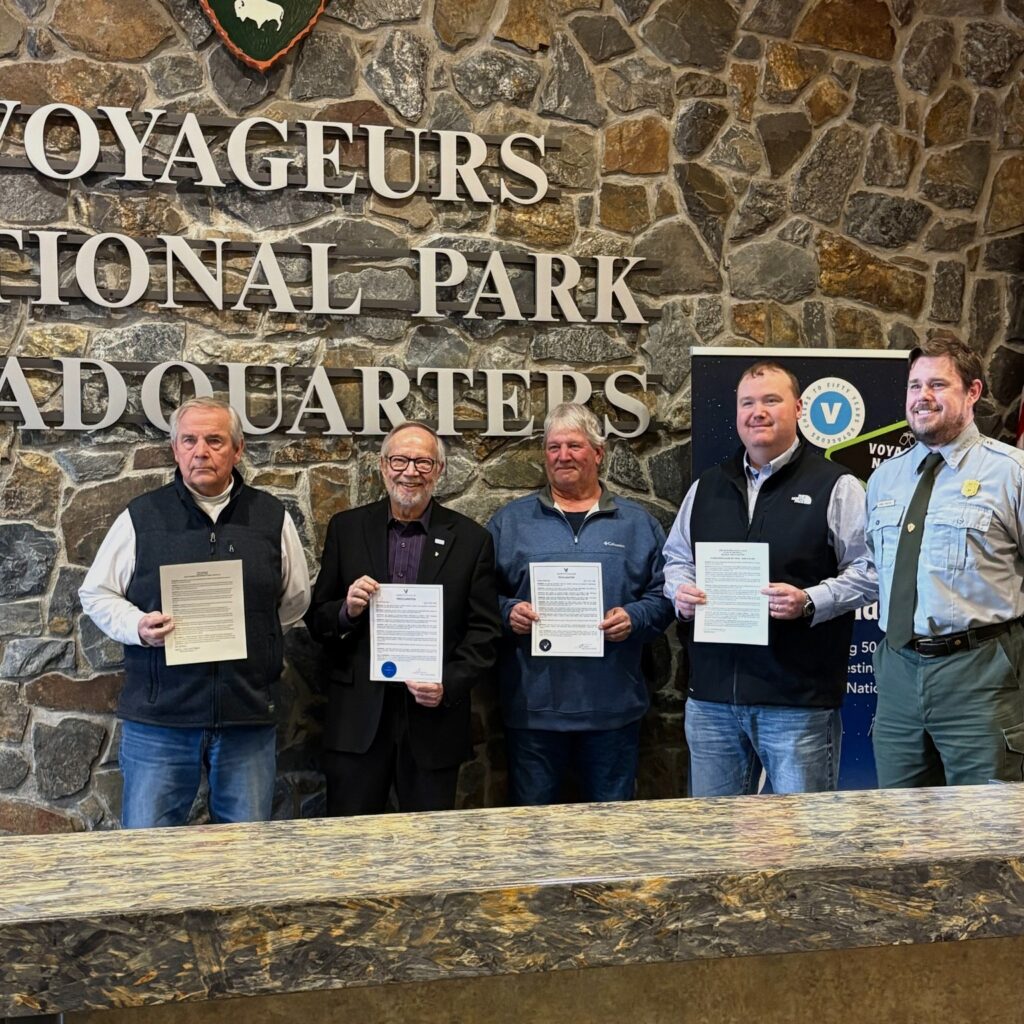
Hallikas also signed a proclamation for the Town of Fort Frances on the same day, reinforcing the municipality’s stance and goals in helping to cut down on light pollution in the Rainy River District, and calling on local residents to do the same.
“Whereas, studies show that artificial light at night contributes to increased energy consumption and disrupts wildlife, particularly migratory birds, insects, and nocturnal animals…,” the town’s proclamation reads,
“…and, whereas, responsible outdoor lighting, such as using fully shielded fixtures and minimizing the use of bright blue-rich lighting, is shown to reduce light pollution while maintaining safety and security… now therefore I Andrew Hallikas, Mayor of Fort Frances do hereby proclaim our support for Project Dark Sky and encourage all citizens to participate in efforts to reduce light pollution, promote energy efficiency, and protect the night sky for future generations, and I hereby proclaim the week of April 13th to April 20th Dark Sky Week in Fort Frances.”
DarkSky is an international organization that is dedicated to fighting light pollution and protecting the night sky. According tot he organization’s website, they work to provide the international dark sky movement with leadership, tools and resources to continue to encourage industry and the public to reduce light pollution and promote responsible outdoor lighting.
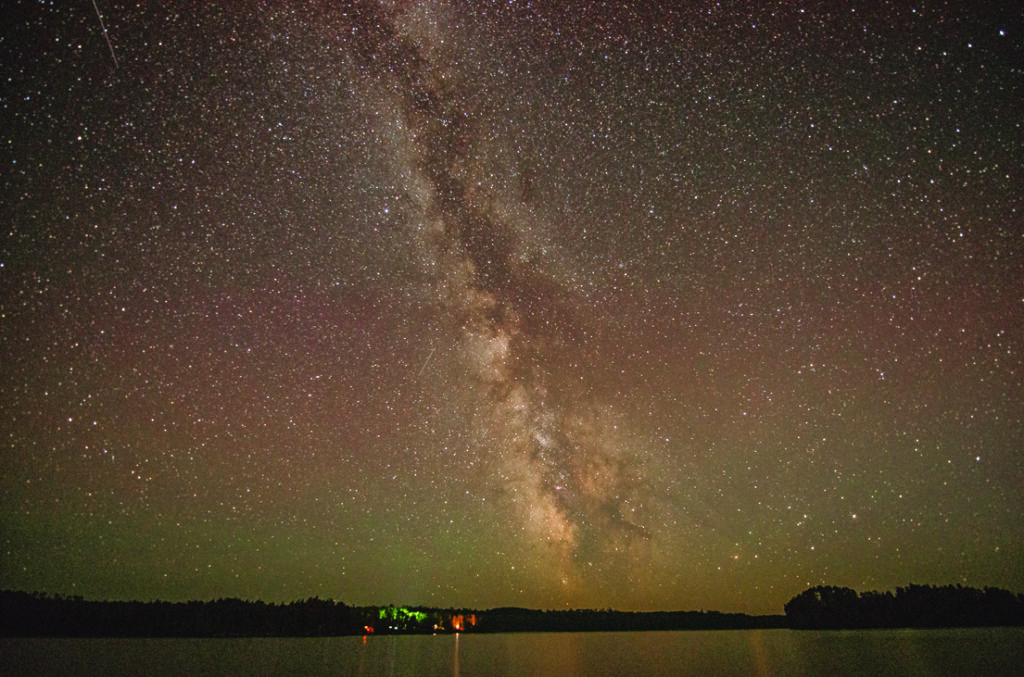
The three municipalities follow in the footsteps of the three largest parks in the region, namely Quetico Provincial Park, and Voyageurs National Park and the Boundary Waters Canoe Area Wilderness in Minnesota, who have each independently achieved a Dark Sky Park designation from the International Dark-Sky Association (IDA). Quetico was the third Ontario provincial park to achieve the designation following Killarney Provincial Park and Lake Superior Provincial Park.
At the time Quetico achieved its designation in 2021, park superintendent Trevor Gibb explained that the designation told campers that they would be treated to a spectacular night sky anywhere within the park, thanks to strenuous conditions set by the IDA.
“It has to be a park that’s protected for scientific, natural, educational or cultural reasons and have opportunities for the public to visit the park and enjoy it,” Gibb said.
“You have to meet a bunch of criteria to be considered for Dark Sky Park status, but the key criteria is just the quality of the night sky… It’s a voluntary process, but it’s quite the rigorous application process with the IDA. One of the first things we had to do was an inventory of all of our light fixtures around the park, park offices and campgrounds, and then we had to create a lighting management plan to change all the lighting we needed to change to dark sky friendly outdoor lighting.”
Studies have begun to show that excessive light pollution has negative impacts on ecosystems, including both wildlife and humans. One such impact is on sea turtle hatchlings, who use the brightness of the horizon to determine where the ocean is once they hatch. With the rise of nighttime lighting near turtle nesting areas, hatchlings become confused from the artificial brightness of the city and wander away from the ocean towards the city, where their chances of survival are dramatically lowered. Artificial lighting has also shown to be harmful to many species of birds who either migrate or hunt at night, as it can lead them off course, throw off the timing of the seasonal migration, or interfere with their ability to gather food.
Members of the public in the Rainy River District can do their share to help combat light pollution this Earth Day by following a list of five principles for responsible outdoor lighting published by DarkSky. These principles include using outdoor lights only if needed, directing outdoor light so that it is shielded and only illuminating areas that need to be lit, making sure that outdoor lighting uses the lowest light level that is required for the job, timing your lights or installing a motion-activated light so that your lights are only on when needed, and to use warmer coloured lights that have less of an impact on wildlife than cooler coloured lights.





