

A person from the Brantford-Brant area is in hospital with the first case of human rabies in Ontario since 1967, according to the Brant County Health Unit (BCHU).
The details surrounding the case are scarce.
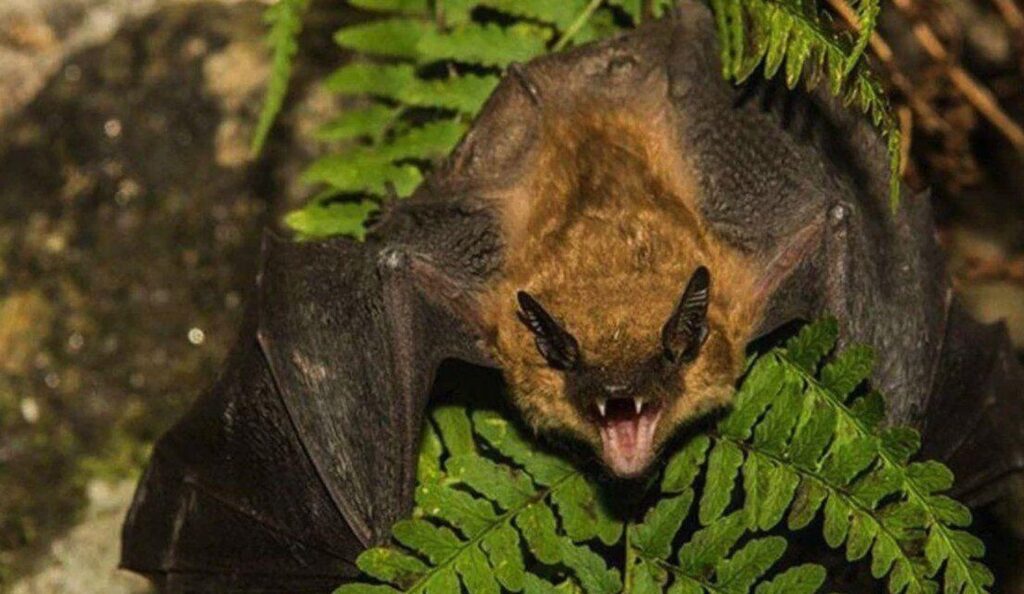
But the BCHU has said the virus was believed to be contracted through exposure to a bat near Gowganda, which is in northeastern Ontario about a three-hour drive north of Sudbury.
How is rabies transmitted? And what should someone do if they come into contact with a rabid animal?
What do symptoms of the virus even look like in humans?
The Spectator asked infectious disease expert Dr. Zain Chagla, from McMaster University’s Michael G. DeGroote Institute for Infectious Disease Research, these and other key questions.
Here’s what he said:
How is rabies contracted?
Rabies is transmitted when an infected animal bites or scratches someone and its saliva enters nerves near the surface of the skin.
If not treated quickly it can travel to the brain, infecting it and causing damage and death.
When the initial contact happens, Chagla said, “rabies is very, very treatable.”
There are therapies that work to “kind of mop up the virus” on the skin or in the nerves before it gets to the brain.
But once it gets to the brain, “the complication rate is high, and it’s almost universally fatal,” Chagla said.
When do symptoms appear?
Symptoms — everything from fever and headache to muscle spasms and difficulty breathing — can take roughly one to seven weeks to develop, depending on the location of the bite or wound and how long it takes for the virus to reach the brain, Chagla said.
If the exposure were on someone’s foot, for instance, it would take longer to reach the brain than if it were on someone’s face.
Once the infection reaches the brain, a person could die within days, Chagla said.
I encountered a bat (or a skunk or a raccoon). What do I do?
“It’s always worth it to talk through this with a provider sooner rather than later,” because the therapies are time sensitive, Chagla said.
A doctor will typically ask about the encounter. “If it’s a bat in the room, it’s less of a risk than a bat that’s actually on a person,” he explained.
Additional caution is taken in cases involving children, for example, who may not be able to say if they’ve actually been scratched or bitten.
In any case, the “individual consideration” of whether someone needs treatment is best left to a health-care provider, he said.
“We’d rather individuals seek care for what they think is an exposure,” and let the provider make a decision based on their risk assessment, he said.
How quickly do I need to be treated?
“Sooner is better, but there isn’t a time limit as long as clinical rabies hasn’t developed,” Chagla said.
What happens if I don’t get help?
Once someone develops neurologic symptoms, the virus can manifest in one of two ways.
Either the infected person becomes “very aggressive,” has “water aversion” and “can’t swallow,” or they lose muscle control, entering a “paralytic phase.” Both are ultimately fatal, Chagla said.
At that stage, “a lot of the management is supportive,” he added. That could include medication to help prevent seizures, or medication to help sedate the person.
Those treatments, though, won’t change the eventual outcome.
“It really is just reducing the symptomatology,” he said.
Who gets vaccinated?
Those who regularly come into contact with animals, such as veterinarians, are given multi-dose rabies shots as part of their routine immunizations.
The shots are also recommended for travellers heading to places where there is a higher chance of exposure, Chagla said.
“But realistically in Canada, this case aside — which is incredibly tragic — the rate of rabies hitting humans is incredibly low. We’re talking about one fatality every 10 to 15 years,” he explained.
Furthermore, post-exposure therapy “is very, very, very effective.”
“As long as we can see people soon after the bite or the scratch we can essentially prevent all the complications from rabies,” Chagla said.




