


Just follow the wood stake-marked trail, and you’re off to winter fun and safe ride during this snowmobile season.
With 30,000 km of trails across Ontario, many trials depend on farmers and other landowners agreeing to let them go through their property.
“That large network of trails, however, all depends on Ontario farmers and landowners who agree to let their land be part of the snowmobiling system in the province – and that’s where we, as farmers, are urging the snowmobile community to be both responsible and respectful while out on the trails,” said Paul Maurice, executive member of the Ontario Federation of Agriculture.
Trail creation and maintenance is up to the Ontario Federation of Snowmobile Clubs (OFSC) and its 179 member clubs across Ontario.
The Southwestern Ontario Snowmobile Region has 2,256 km of trails and 20 clubs that maintain them, a list that includes the Elmira Snowmobilers Club, among others in and around Woolwich Township.
This year’s season got off to a slow start with the lack of snow, but with the influx of winter weather over the past few weeks, riders are seeing trails open all over the region, noted Graham Snyder of the Southwestern Ontario Snowmobile Region.
“It’s been up and down, but some areas are shaping up well. For example, Elmira was up there grooming at the beginning of the week, and they’re in pretty good shape right now. And then you get into some other areas, and suddenly, the snow disappears like it’s hit and miss. But some trails are available throughout southern Ontario now,” he said.
Potential riders must purchase a permit to ride along those trails, which keeps them insured and provides them with access. Permits can be purchased on the OFSC website.
Trail marking and maintenance are done mostly by volunteers, who get permission from landowners to use their property, and it is important for riders to respect these markers, said Snyder.
“There are hidden dangers under the snow, like farm ponds or streams where the ice might not be thick enough to hold the weight of a heavy snowmobile, or farm equipment stored outside, both of which can cause injury,” said Maurice.
Off-roading can also cause damage to the land and soil under the snow or the plants growing there in the fall that will re-emerge in spring.”
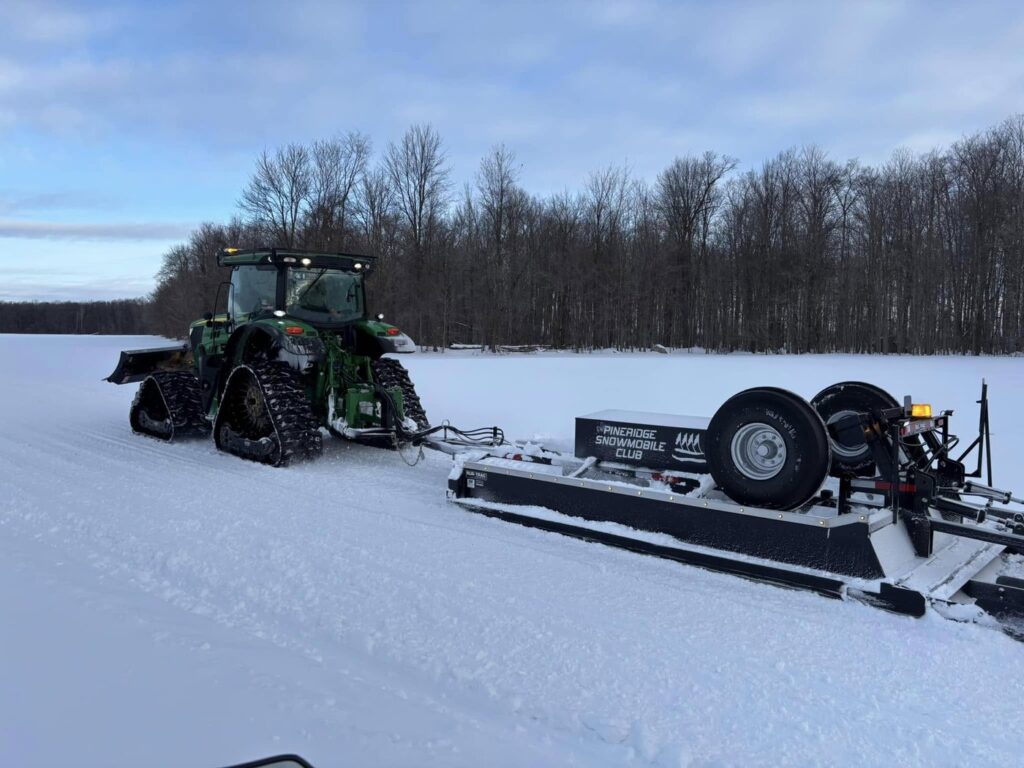
The clubs connect to a tractor an attachment called a groomer that processes and cuts the snow, removes the oxygen, and leaves a tabletop trail behind it. After two to three hours, it is hard as a rock. It works similar to an ice-resurfacer but just for creating trails, said Snyder.
“We maintain that area where we groom it and take care of it, and then when we tear down and at the end of the season. We consult with the landowners, just to make sure if there is any damage, we may reimburse them for it and try to keep everybody on good terms,” said Snyder.
“It is a win-win. We benefit by having the snowmobile trails going from here to Tobermory – pretty much anywhere in Ontario where you can get on the sled.”
“But also, the farmers’ benefit is that we keep most of the people on the trail. We keep them from running all over the place, which, if we didn’t have trails, they would be renegades running all over the place throughout Ontario, and when a trail is shut down, sometimes that is what happens.”
There have been very few complaints from farmers and landowners over the past couple of years, and they have good feedback from many farmers who enjoy having the trails.
“Farmers are urging the snowmobile community to take proper precautions to stay safe, be prepared, and respect landowner rights by staying on the officially mapped and designated trails,” the OFA told the Observer.
“It’s important for Ontarians to be aware of trespassing rules and their responsibilities around making sure they ask permission before they enter private property or staying on marked, designated trails when out enjoying the winter.”




