

A decade-long partnership between the Canadian Foodgrains Bank and global grain company Bunge has come to an end following a corporate merger and policy change that will affect how some prairie farmers support hunger relief efforts.
The Winnipeg-based Christian relief and development organization says Bunge’s current global community investment policies no longer allow the company to support faith-based organizations, bringing an end to growing projects, grain donations and matching contributions previously tied to the partnership.
“Bunge’s current global community investment policies and guidelines preclude them from being able to support faith-based organizations like the Canadian Foodgrains Bank,” the company said in a message shared with supporters. “This impacts all aspects of the Foodgrains Bank programs supported by Bunge, including growing projects, cash ticket donations and donation matching.”
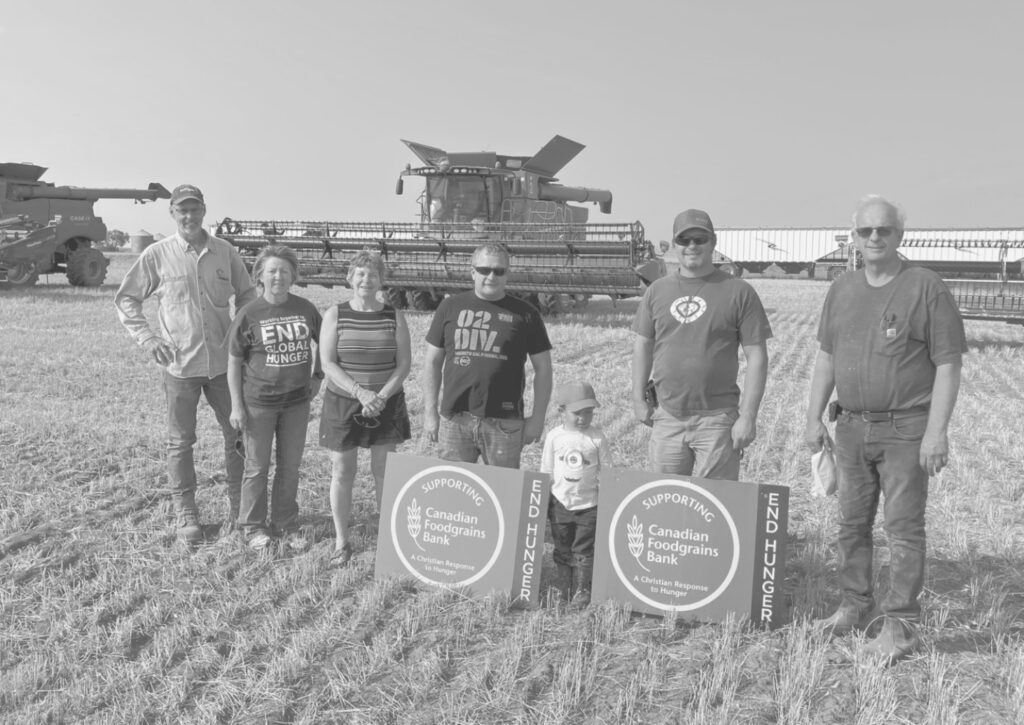
Bunge LLC recently completed a merger with Viterra and is now operating globally under the Bunge name. Over the past 10 years (when Viterra was a partner) Canadian farmers and communities were able to donate crop proceeds at company terminals and use land around terminals in Saskatchewan and Alberta for growing projects supporting the Foodgrains Bank’s work.
As part of the arrangement, the company also provided a $5-per-tonne matching donation on crop proceeds directed to the organization.
Christina Philips, Director of Resources and Public Engagement for the Foodgrains Bank, said the partnership was particularly meaningful for farmers whose nearest elevator was a Bunge terminal.
“In 2025 we celebrated 10 years of partnership with Bunge (under their Viterra name) as the company donated land to volunteers who farmed it and donated crop proceeds to Foodgrains Bank, and they were a valued part of our corporate support,” Philips said.
“Particularly for Canadian farmers whose closest elevator terminal was a Bunge terminal, this partnership made donating the proceeds from their crops significantly easier, and we often heard from farmers how grateful they were for how easily this facilitated their support of this work.”
She noted that some of those terminals under previous ownership had supported the organization for decades, including through financial donations.
With the policy shift, Bunge will no longer allow crop proceeds to be directed to the Foodgrains Bank through its terminals, provide land for growing projects or offer matching donations tied to grain contributions.
Philips said the organization has long worked with grain elevators across Western Canada to facilitate donations and that most continue to do so.
“We have always worked with grain elevators to facilitate donations, and the majority do this easily,” she said. “We’re always looking for opportunities and there are a few elevators that ‘boost’ donations, where they match up to a certain amount. Right now, our focus is connecting with supporters and growing projects who are impacted by this decision.”
Looking ahead to the coming growing season, Philips said farmers still have several options to support the Foodgrains Bank’s hunger relief efforts.
“One of the most direct ways farmers can support Foodgrains Bank projects is by taking part in a community-based growing project, joining an existing one or starting your own, where farmers plant, harvest and sell crops, then donate the proceeds to help support Foodgrains Bank’s work of ending hunger,” she said.
Farmers who are not part of a formal project can still donate proceeds from sold crops through other terminals that facilitate such contributions. Online donations are also accepted, and producers can identify themselves as food growers when giving.
“For farmers who wish to still deliver their crops to a Bunge terminal, Bunge will purchase the crops as a regular customer,” Philips added. “Farmers can cash out the proceeds from the delivery and donate on their own to Foodgrains Bank.”
In a message to supporters, the Foodgrains Bank expressed gratitude for the decade of collaboration.
“Although our partnership with Bunge has come to an end, we remain grateful for the 10 years we were able to work together and make a difference in the fight to end hunger,” the organization said.
The Foodgrains Bank said it remains committed to its mission and is encouraging farmers and supporters across the Prairies to continue stepping forward as growing season approaches.




