


Darcy Whitecrow considers it his duty to preserve his culture, planting its seeds through traditional language and a connection to nature. A member of Seine River First Nation, Whitecrow says he is here to pass on the lessons he has learned through family, a traditional Ojibwe upbringing and life experience.
“You’re owned by the Creator, and He puts you down here for a purpose,” Whitecrow told The Times.
Whitecrow has been true to that purpose, preserving and teaching Anishinaabemowin in words through the children’s books he has authored and breeding Ojibwe horses to help save them from extinction.
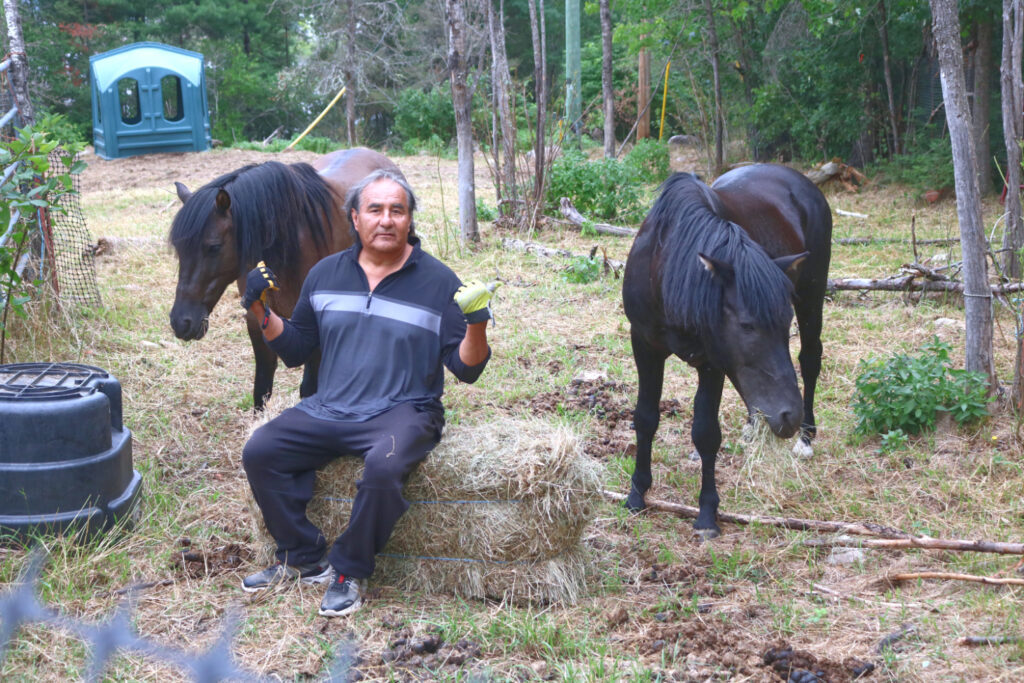
“We’re kind of preserving both these things at once, the language and the horses. It’s the most important thing because once we lose it, we lose our culture,” Whitecrow said.
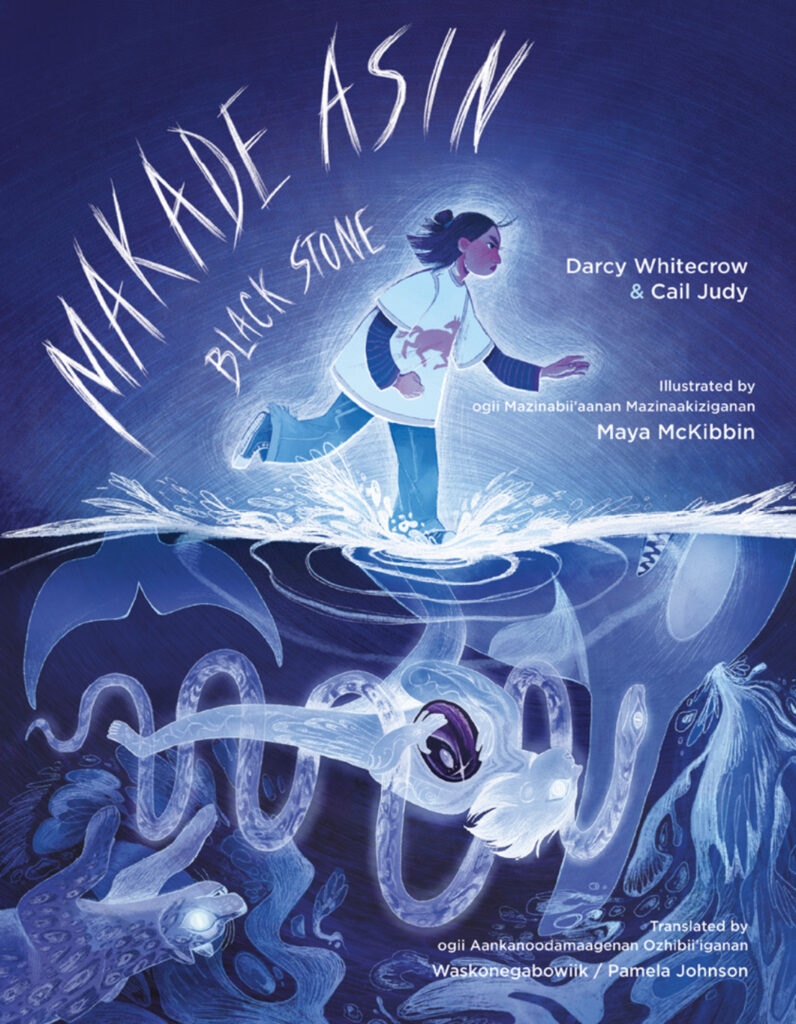
Whitecrow’s most recent literary project is Makade Asin/Black Stone, a picture book co-authored with Vancouver writer Cail Judy (available to buy on Aug. 4).
Inspired by an Ojibwe story, it contains text in both Anishinaabemowin and English. It’s just one example of how Whitecrow has taken his connection to his own culture and presented it in a way that appeals to young minds. He believes if his work can spark an interest, he has done his part, and it is then up to the reader to follow.
Unlike many Indigenous youth of his generation who were forced into residential schools and stripped of any semblance of heritage, Whitecrow was hidden by his family, who wanted him to be raised close to his roots. When he was a child, his grandmother told him that the reason he was taught their culture so closely was to eventually share it.
“I was a teenager before I actually started speaking English,” Whitecrow said. “Everybody was coming back from residential school, and I was the odd Indian brought up that way. Back in those days, the law considered everybody that went to residential school civilized and the ones that didn’t go to be savage—so I’m a highly educated savage.”
“I learned my English well; I learned my ABCs and 123s and got past some college and university education. At the same time, I understood that learning the stuff was part of my journey to begin writing things from my perspective, as Anishinaabe.”
Whitecrow’s motivation for the book came from an appearance at the Kingston WritersFest, when during a Q&A session he was asked what someone needs to do to reconnect with their culture.
“I can’t bring out an answer just like that and say, ‘This is what she’s got to do,’” Whitecrow said. “But I do know a story that I’ve used over time and time again throughout my whole life in regard to looking within. It’s called Black Stone.”
Black Stone is the story of a boy who must face his fears alone during a vision quest in the wild, and through perseverance finds that courage was within him all along.
“A lot of times, we seek answers all over the place to try and find out, or perhaps have someone tell us, who we are. But in our traditional belief system, we are born with that, and it’s just a matter of us, as individuals, to find out what it is.”
With it being a tale he’s looked to for guidance so often, Whitecrow wanted to adapt it into something any child could learn.
Although he has a passion for the language and teaching it to others, his dedication to preserving culture doesn’t stop there.
One of the bigger challenges he’s taken on is to ensure the survival of the Ojibwe horse, working with organizations north and south of the border to safely pair mates. Along with his business partner and friend Kimberlee Campbell, they started Grey Raven Ranch, which has a dedicated mission to doing just that.
The Ojibwe horse was saved from the brink of extinction in 1977. After decades of government-ordered culls to reduce the number of the freely roaming horses, only four adult females were known to be left alive. People from Lac La Croix First Nation rescued and smuggled the mares to Minnesota, where they were bred with Spanish Mustangs to save the genetic line.
Whitecrow also retold this story in another book, Across the Ice: How We Saved the Ojibwe Horse, to educate youth on how the species was nearly wiped away and how it was recovered.
To this day, the horse remains critically endangered, with only approximately 200 remaining throughout Canada and the U.S.
One of them, a stallion named Chase, is actively under the daily care of Whitecrow in Seine River, along with a breeding partner, a wild mustang named Jade.
“We’re doing outcross right now,” Whitecrow said. “We’re outcrossing because of the inbreeding coefficient numbers. It’s something we want to avoid.”
Due to the small number of mares left after being brought back from near-extinction, breeding ranches need to pair the Ojibwe horse with very similar breeds in order to mitigate risk of mates from the same bloodline, while also keeping the Ojibwe genetics moving into future generations.
To Whitecrow, whether it’s language or this distinct breed of horse, it’s all about preserving a culture that if lost, won’t be able to return.
“If we don’t do this, if we don’t keep a record of our own history, that’s where we lose a lot of it. Some of these simple teachings, like Black Stone, are not recorded, and when the elders are gone, we lose a library of knowledge and experience.”




