
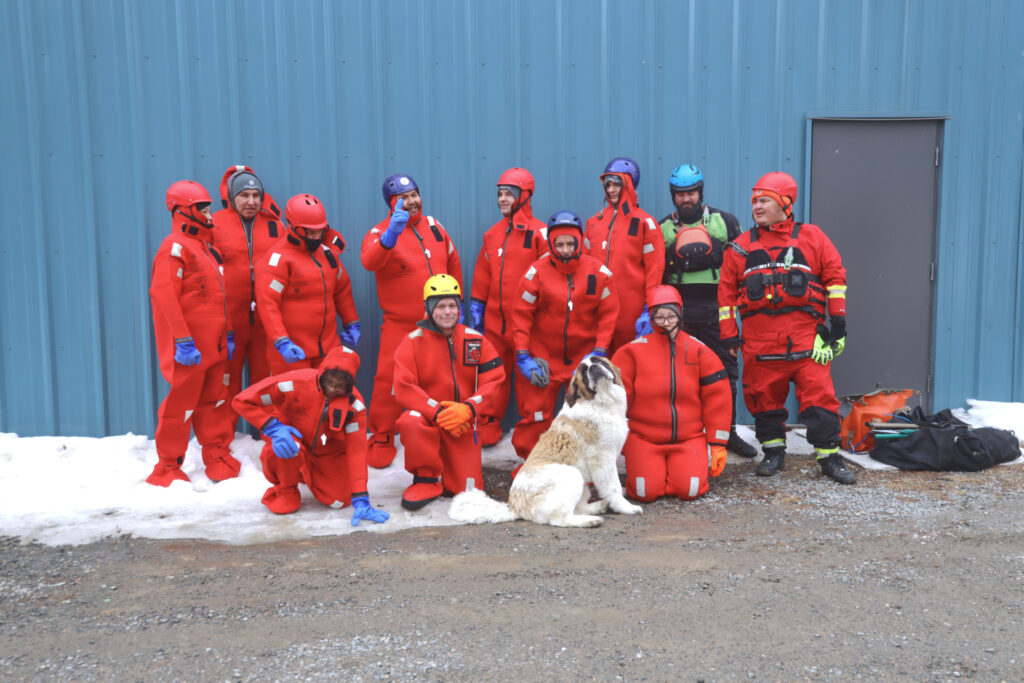
Last week, 12 members of Naicatchewenin (Northwest Bay) First Nation (NFN) took part in ice rescue training, which will enable them to help out community members who find themselves in trouble.
Bob Morrison is the Community Emergency Management Coordinator, Deputy Fire Chief and First Response Team Coordinator for the First Nation north of Devlin. He helped organize and took part in the training.
“This two-day ice water rescue training is going to benefit our community so we don’t have to wait [potentially] hours for other resources to come in, so we can actually take care of our own,” Morrison said.
“Instead of us going to a funeral, we can preserve life.”
Morrison is hoping that NFN can be an example to other First Nations and communities in the area to take responsibility for their communities’ own safety.
“We’re really hoping that other First Nations or even other even municipalities will say ‘well, if they can do it, why can’t we?’ So again, it’s for community by community, and we’re really hoping that the ripple effect will reach other communities,” he said.
Nic Hornsveld is a lead instructor with Boreal River Rescue for the two-day course. The course began with the students taking part in online theory classes before the instructor came to the area from southern Ontario, where he’s based.
Day one saw students spend time learning the basics of ice rescue.
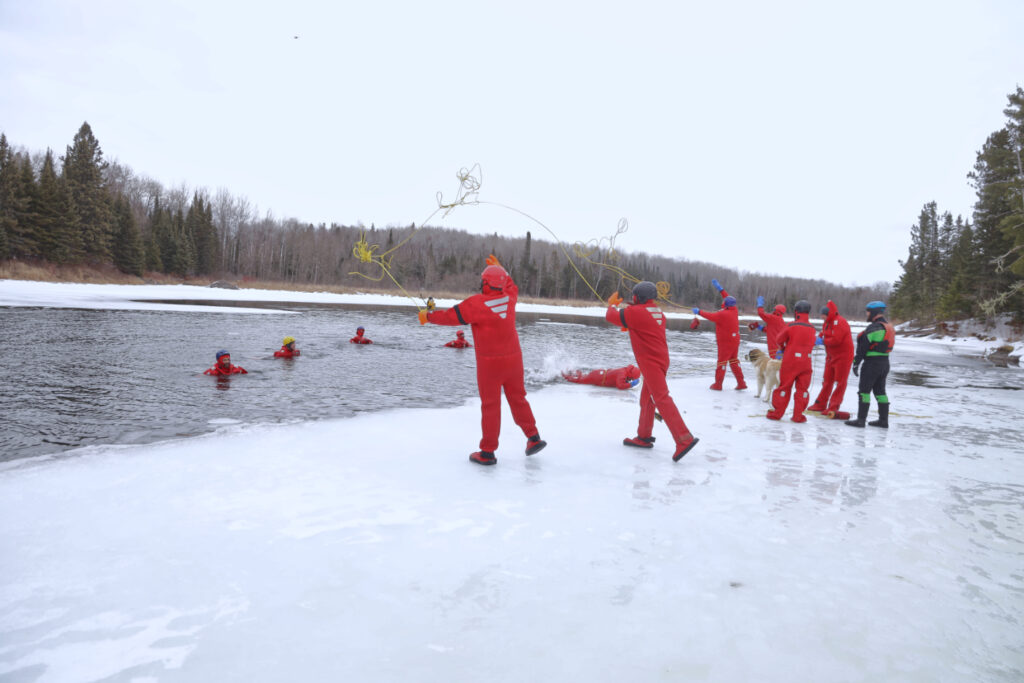
“We kind of took the first step in doing kind of the basic ice safety of how to identify where to go, how to get yourself out of a situation, and then with very basic tools, pretty much just a rope, how to get someone else out, how to coach them to get out and, yeah, different techniques to pull them out of the ice,” Hornsveld said.
The Times was onsite to observe the training and report on day one.
There was a somewhat suspect area of spring ice in the river that runs through the community that made for good training ground in the afternoon of day one. After practice throwing rope bags in the community gym, everyone suited up in immersion suits and, after making a tobacco offering to the river, took to the ice.
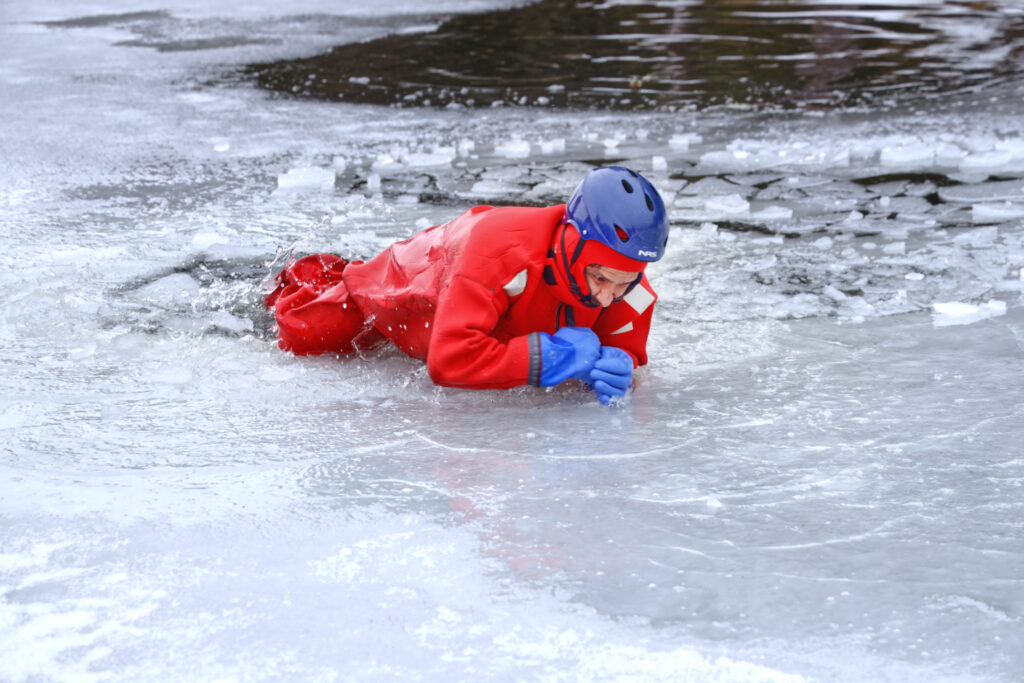
Many were apprehensive about getting into the icy waters while Hornsveld’s guidance. After a few people broke intentionally broke through and realized the suits were up to the task of keeping them afloat and dry, many members of the group were throwing themselves into the water with childlike abandon, attempting to run across ice pans and failing majestically as well as paddling around in the cold March waters.
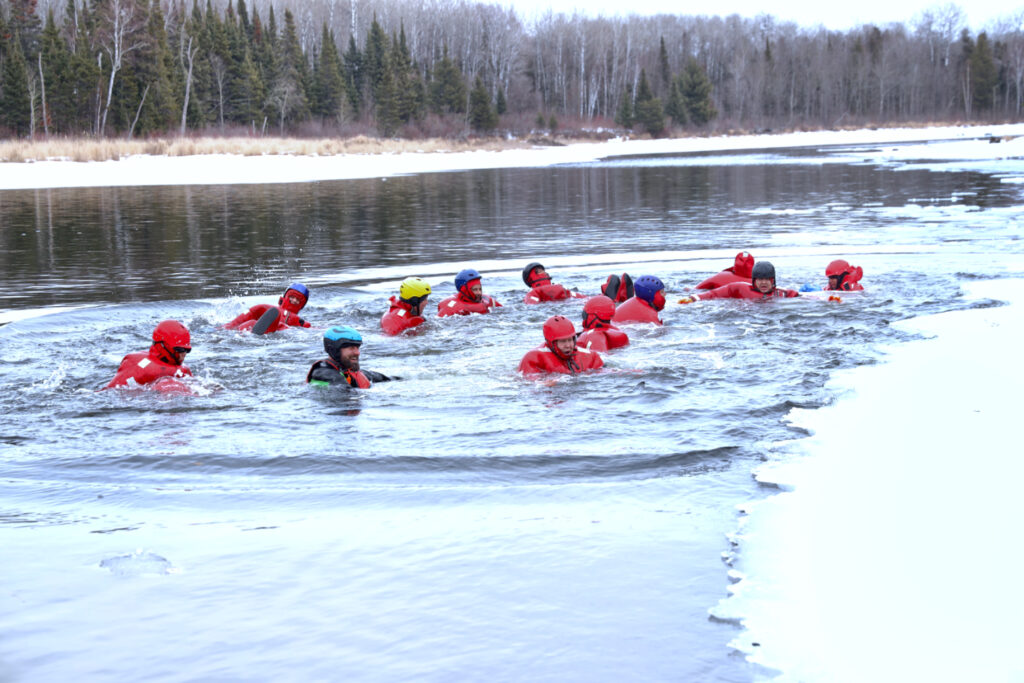
Once everyone was used to the water and their immersion suits, they started with training exercises, working with the rope bags they’d practiced with in the gym.
Following the exercises in suits, several trainees took the leap and stepped into the water in their street clothes to get a taste of what potential rescue patient might feel if they were in the icy water.
Day two saw the students take part in a team rescue operation.
“Tomorrow is gonna be a much bigger day where we go into more of Team rescues, and all our Go rescues, so the ability to actually get out on the ice, get in the water, and go after a patient who can’t help rescue themselves, so they’re past any sort of ability to help themselves. They can’t pull themselves out or anything like that, and we need to actually go and do an effective rescue,” Hornsveld said.
Hornsveld says he believes it is important for communities like NFN to have systems in place to be able to save potential victims.
“I think the more remote you get, the longer a response takes,” he said.
“So being able to have a team that’s ready to go out and do those sorts of rescues, and especially a team like this, where they’re trained and have the equipment, is a much more effective way of getting them out and protecting their own community, as opposed to having to call outside resources in.”
NFN was able to complete the training and procure its own ice rescue equipment through a grant from the Emergency Management Assistance Program administered by Indigenous Services Canada. Tyler Yatchuk is the Emergency Management Coordinator with Pwi-Di-Goo-Zhing Advisory Services which is an organization that provides advisory services to 10 area First Nations.
Yatchuk helped the community submit the application, which saw them receive $60,000 to conduct the training and acquire the equipment needed to be able to create an ice rescue team, which includes the immersion suits necessary to be able to go into icy water, life jackets, helmets, rope bags and even an inflatable rescue boat, among other equipment.
“Emergency Management Assistance Program applications are fairly simple to put together,” he said.
“There’s not a lot of information on the internet about them. You need to define your cost, time, and scope of what you want to do. Get 70 per cent of your information and push forward. If you try to wait for 100 per cent you’ll never get anything done.”
“Emergency management, it’s life safety, incident stabilisation and property protection,” Yatchuk said.
“I didn’t say Indigenous life, or any other life. Life is life doesn’t matter where you are, where you’re from, life is important, so bringing that capacity into the communities here, yeah, I’ve dedicated the rest of my life to doing it.”
Yatchuk says he is able to help any of the First Nations under his purview with applying for similar programming.



