


DID YOU KNOW?
Next week marks the return of school in Fort Frances and across the Rainy River District, meaning children will be returning to classrooms, playgrounds, and school buses. This also means increased traffic and young pedestrians navigating new routines and unfamiliar routes, especially near school zones.
BACK-TO-SCHOOL: ESSENTIAL TIPS
As the new school year begins, it’s more important than ever to make sure your child is safe. This week’s column offers essential safety tips for parents/guardians, students, and drivers to help with ensuring a safe school year. While these tips are a starting point, they are not exhaustive. Remember, a child’s safety and well-being ultimately depends on the active involvement of their parents or guardians.
BACK-TO-SCHOOL SAFETY: A SHARED RESPONSIBILITY
With the increase in traffic, buses, and pedestrians, especially in the morning and afternoons, it’s vital to be mindful and focused of our surroundings, as well as slow down when driving in school zones and near school buses. In addition, Back-To-School Safety is a collective responsibility, which involves parents/guardians, students, motor vehicle drivers, and motorcycle drivers etc. who all must focus and zero in on the responsibility to keep children and others safe.
DRIVE WITH CAUTION: CHILDREN ARE UNPREDICTABLE
- When driving, you should always be on high alert for children.
- Be especially vigilant in areas where kids are likely to be, such as parks, playgrounds, and schools; a child can dart into the street in an instant, often from between two parked vehicles.
PARENTS/GUARDIANS
- It’s important for parents/guardians to talk to children about road safety.
- If children are old enough to walk to school, it’s important to teach them to use designated sidewalks and crosswalks whenever possible. Safety experts advocate that if sidewalks are unavailable, children need to know to walk facing traffic to see approaching vehicles, and motorcycles, etc.
- Additionally, parents and guardians etc. should avoid dropping children off for school on the opposite side of the street from their school.
STUDENTS
- Students who walk to school should review their route with an adult at home.
- Wherever possible, kids need to know to use a marked crosswalk when crossing the street.
- Help kids stay safe by teaching them to always look both ways before crossing the street. A great way to remember this is with the phrase: STOP, LOOK & LISTEN!
- Students also need to know to remove ear buds and headphones so they can hear their surroundings.
- Phones and digital devices can be distracting when walking and crossing streets; safely getting to school requires students to actually put away their phones etc. and stay focused. This simple act can prevent serious incidents, but many people, both young and old, struggle with it.
SCHOOL BUSES
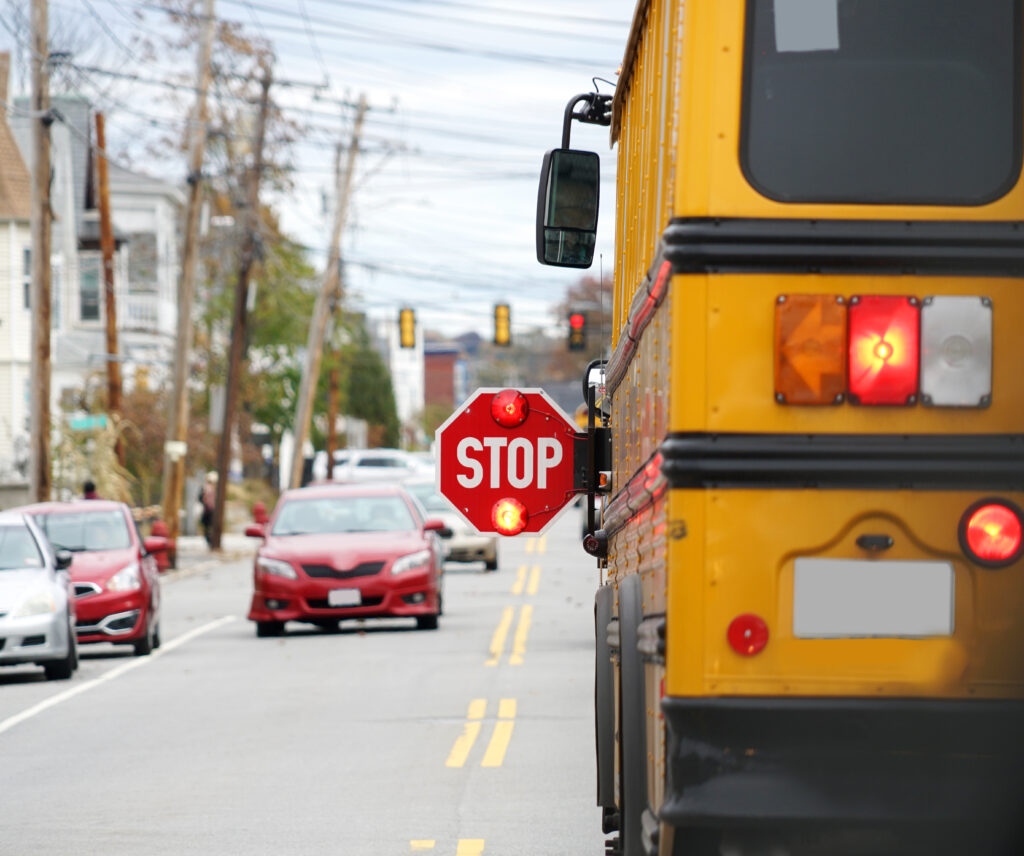
When you see a school bus, pay close attention. If its overhead AMBER-LIGHTS are flashing, it means the bus is about to STOP to pick-up or drop-off passengers; SLOW DOWN and prepare to STOP whether you are behind or approaching a school bus.
- If the bus stops and flashes either its overhead RED-LIGHTS or activates its STOP-ARM, this means that the bus has stopped to pick-up or drop off passengers.
- STOP and wait for all passengers to get on or off safely.
- As the bus moves onward, be alert and watch for children and other pedestrians crossing the road.
SCHOOL ZONE SAFETY MEASURES
When you see a 30 km/hr or even a 40 km/hr speed limit sign, which is the speed limit in a school zone in Fort Frances, those lower speeds are in place to protect children and others in the area.
Meanwhile, a lower speed limit in school zones saves lives. Many Canadian communities have adopted 30 km/h SCHOOL ZONES because the reduced speed gives drivers more time to react and stop, which significantly lowers the risk of collisions involving children and other pedestrians.
Remember, taking the time to learn and practice injury prevention costs you nothing. Failing to do so, could lead to the unthinkable … the loss of your life and the lives of those you hold dear.
Safety—it starts with you.



