

Moose look shabby in spring because of hair loss in the winter. That’s because moose are the major host of the winter – or moose – tick.
Ticks are arachnids, which wait on grasses or shrubs to latch themselves to the moose, just like wood ticks, which wait for you or me.
Winter ticks cause blood loss, itching and inflammation. They spend the winter on the moose, which have two layers of hair; long stiff outer hair and short, dense wooly under hair, to prevent freezing in winter, and that’s where the adult ticks live until spring.
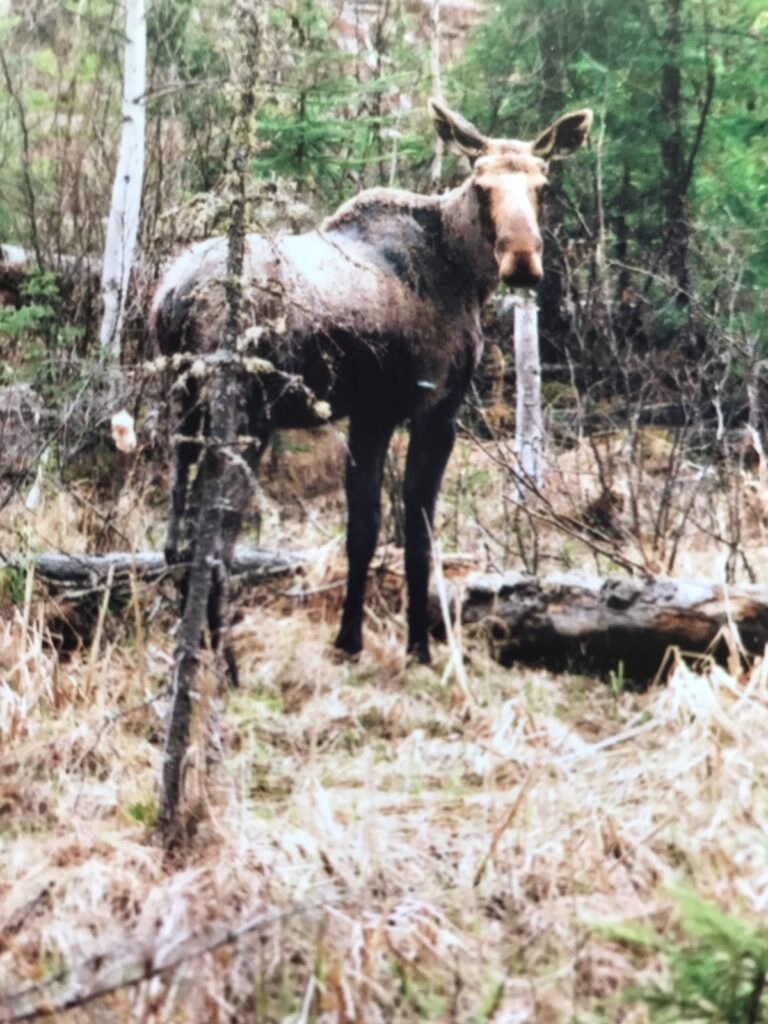
Sometimes there are more than 10,000 ticks irritating a moose. The animals rub against trees or rocks or use the hooves of their hind legs to rub themselves in an attempt to rid themselves of the pests. In doing so, they pull off much hair. If too much hair comes off, they may freeze to death.
In May, all adults drop off, so in the summer, they are tick-free.
In early September to November, the larvae form clumps of “seed ticks”, which infest the moose and feed on blood. By November, they moult into the nymphal stage. The nymphs are dormant until late January and then moult into the adult stage. And the cycle begins again.




