I’ve been to the Summer Olympics twice, and I’ve been to Paris twice, but never both at the same time. Since it won’t happen when the 33rd Games begin next week, and since it is exactly 100 years between Paris Olympics, I’ve probably missed my chance.
So I’ll be content with memorable moments from my Summer Olympic experiences from Mexico City and Montreal. And since there’s always “never anything like the first time,” there was nothing like Mexico City in 1968.
The only part of Mexico I’d ever seen was the Gulf, once from a beach in Texas. When I told Winnipeg media colleagues I was flying from Minneapolis to Mexico City on an airline none of us had ever heard of — Mexicana — they chided my choice and said it had been nice knowing me. I had that last laugh, along with the nicest flight of my life. Okay, it was the nicest of three.
It had already been an Olympic year of shootings for which there are no medals: the King and Kennedy assassinations. There was unrest in Mexico City, with as many people as Ontario. Demonstrations by students opposing the Olympics left hundreds dead and thousands arrested. All this was lost on the naive reporter who checked into the Maria Isabel Hotel on Paseo de la Reforma — six kilometres from the deadly demonstrations — on the eve of the Games.
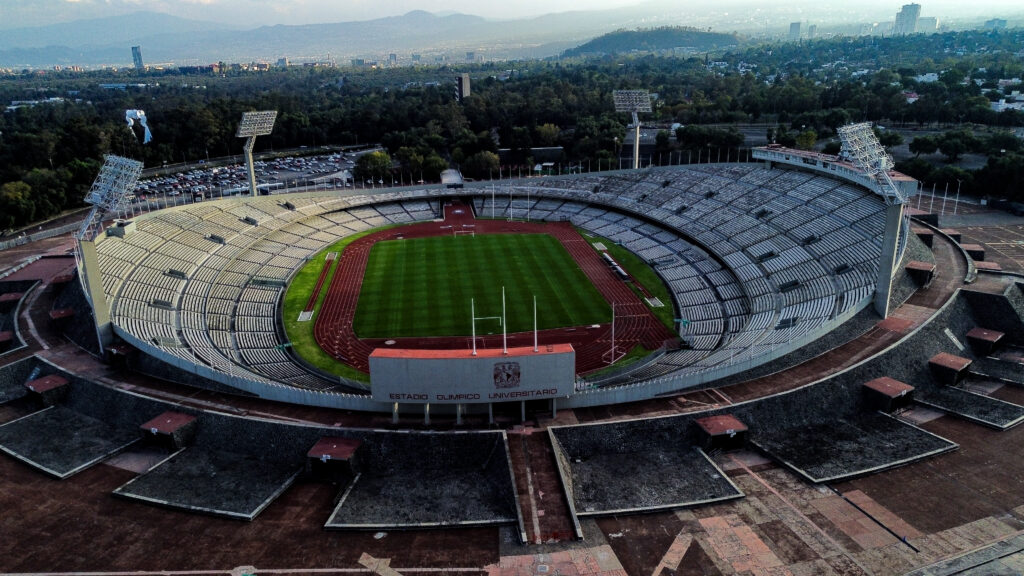
I was there at my own expense, on vacation, with a plan to “cover the Olympics.” My perk was an all-events press pass that included local bus transportation, the pass legitimized by being a sports writer from Canada. As my own boss, I could cover whatever I wanted for two weeks, and what I wanted was anything important for Canada’s 138 athletes, particularly the swimmers and divers. If I wasn’t at the Francisco Marquez Pool, I was at Estadio Olimpico for opening and closing ceremonies and track and field events, or exploring parts of the biggest city I’d ever seen. Or riding a press bus with logistical transportation issues.
Canada won five medals (four at the pool) and I was fortunate to see them all, the last one entirely by accident. That was the only, and unexpected, gold in Equestrian Team Jumping, won by Jim Day, Tom Gayford and James Elder, whose names were more foreign to me than Francisco Marquez. I’d arrived at Estadio Olimpico for the closing ceremonies just as, luckily, Elder was completing his gold medal-winning ride in the Games’ final event.
As much as I saw, there was much I didn’t see. For example, the “Fosbury Flop” was introduced by U.S. high jumper Dick Fosbury (the first time I saw a high jumper clear the bar backwards was months, maybe years, later). Long jumper Bob Beamon shattered the world long jump record without me. George Foreman arrived as a heavyweight champion…George who?
I did see the famous “black power” salute that got American sprinters John Carlos and Tommie Smith kicked out of the Olympics after the medal ceremony. The symbolism of that also escaped me.
Political unrest? Black power protest? To me, covering the Olympics was only about the medals.
Just like it will be in Paris, right?