


Creativity does not cease to be at the end of an artist’s brush, nor is it reserved solely for artists.
If you are a human being, you are creative in impressive and at times overlooked ways.
The problem is not the absence of creative impulse or talent, but an often-narrow belief of what constitutes creativity—and what it can be.
I was reminded of this on Tuesday morning when supporting another resident of our town who has begun their public speaking journey. I shared with her that if purposefully done, one’s words can fall upon another’s ears like music.
Most importantly (and resting at the heart of this review), when you share your words, thoughts or emotions with others, you are sharing parts of your soul. Your spirit. You.
Whatever we call it, we share our light with others when we do. The medium can change, but the glow does not.
I’m of the belief that if someone creates from their heart and soul, it can be art.
Whether it is Alex Grey painting a masterpiece or an orator speaking to the heart of an arena, it is art.
Whether it is Argentine-American musician Paz Lenchantin resonating beautiful tone or a teacher who has spent all morning guiding learners and meeting them where they are—teaching to and from the individual—it is art.
Whether it is Ojibwe-Anishinaabe comic artist and illustrator KC Oster using the magic of a pen to explore starry skies through visual magic or comedian Ali Siddiq trading narrative for laughter, it is art.
Whether it is French poet Arthur Rimbaud adding more beauty to the world through scrolling cursive melody or a friend disguising a heartfelt thought within the puzzle of columns, it is art.
Art is the sharing of one’s light. The medium is how the light moves.
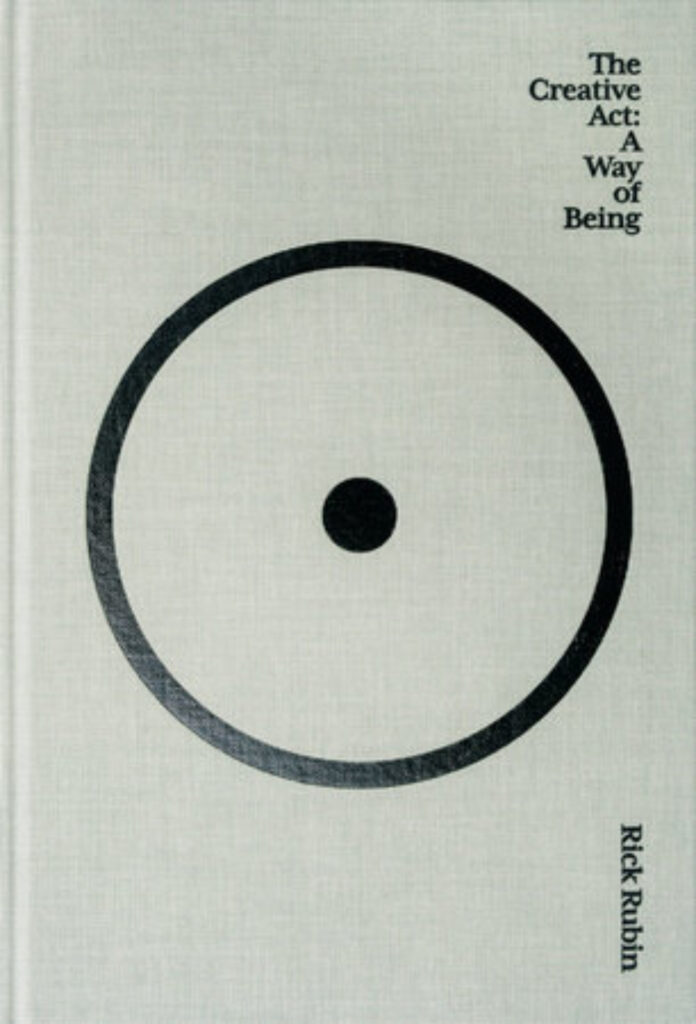
The Creative Act: A Way of Being is a 2023 book by groundbreaking and iconic music producer Rick Rubin that explores a philosophy of ideas and creativity. According to Rubin (who has worked with a litany of artists such as Metallica, the Red Hot Chili Peppers, Audioslave, American Head Charge and others), creativity is a capacity within each person. Because one is a human being, the capacity for creativity is always present. Artist or not.
Through storytelling, reflection, experience, and inspired insights, Rubin’s core ideas seem to be small sparks thrown toward the rocket fuel that exists within us all, just waiting to ignite.
There are notable pieces of advice Rubin offers that illuminate the rooms of searchers and seekers of such pursuits.
It is through engaging with the world (be it work, relationships, or simply living our lives) that creativity animates and expands. The world we share is full of inspiration. Creators of art and those who walk the edges of a creative spirit look for it, observe it, and receive it. Creativity is highly related to observation, whether it is paying attention to the external environment and happenings in the world we share, the internal world only we know through our thoughts, emotions, and experiences, or everything in between. The more we see (and remain open to seeing), the more material we hold in our hands to ignite creatively.
It is through experimentation, play, persistence in original approaches, a focus on creating rather than desired outcomes, valuable uncertainty and an openness to not knowing where the staircase leads that some of the greatest creative works emerge.
According to Rubin, showing consistent practice and creative habits is key. Continual creation, no matter how strongly perfectionism and fear try to block such habits, will lead to more creativity when we push through. He also suggests that the generation of ideas must flow freely first and that refinement should come later. Innovation is often stifled when creation and criticism occur simultaneously. Limitations can also serve as a springboard for inspiration by increasing focus and leading to originality.
Finally, art is something that is never conclusive. Each pursuit, work of art, and original creation can be shaped and changed endlessly. It is key that those who create know when to “let go” of the work.
Ultimately, Rubin shares that creativity is not something switched on and off. Rather, it is a way of perceiving, engaging with, and interacting with the world that surrounds us with deliberate openness and attention—especially to the unknown.
Just as one notable creative spirit once wrote:
“I embrace my desire to feel the rhythm, to feel connected enough to step aside and weep like a widow, to feel inspired, to fathom the power, to witness the beauty, to bathe in the fountain, to swing on the spiral of our divinity—and still be a human.”
Robert Horton is an educator, author, orator and linguist. He is a member of Rainy River First Nations.




