

After years of lobbying the provincial government to lift a tuition freeze enacted during COVID, post secondary institutions in Ontario are celebrating the province’s recently announced funding changes.
Universities and colleges in Ontario will be permitted to raise tuition by up to two percent for the next three years, followed by the lesser of two percent or the three year average inflation.
In addition, financial assistance for students is effectively being flipped on its head – with non-repayable grants administered through OSAP now being capped at 25 percent, while previously students could receive up to 85 percent of OSAP funding via grants.
The provincial government says these changes still keep Ontario’s postsecondary schooling costs among the lowest in the country, and in a release Ontario’s Minister of Colleges, Universities, Research Excellence and Security Nolan Quinn called changes -including a $6.4 billion funding commitment- are focused on the long term sustainability of the province’s post-secondary schooling.
“In order to protect our province, it is imperative that we continue to train a strong, highly skilled workforce for Ontario for decades to come,” Quinn said.
“Our government is not only ensuring the sustainability of our colleges, universities and Indigenous Institutes, but also preparing our graduates with the in-demand skills they need to meaningfully find good-paying, rewarding careers, while continuing to keep education accessible and keep costs down for students and their families.”
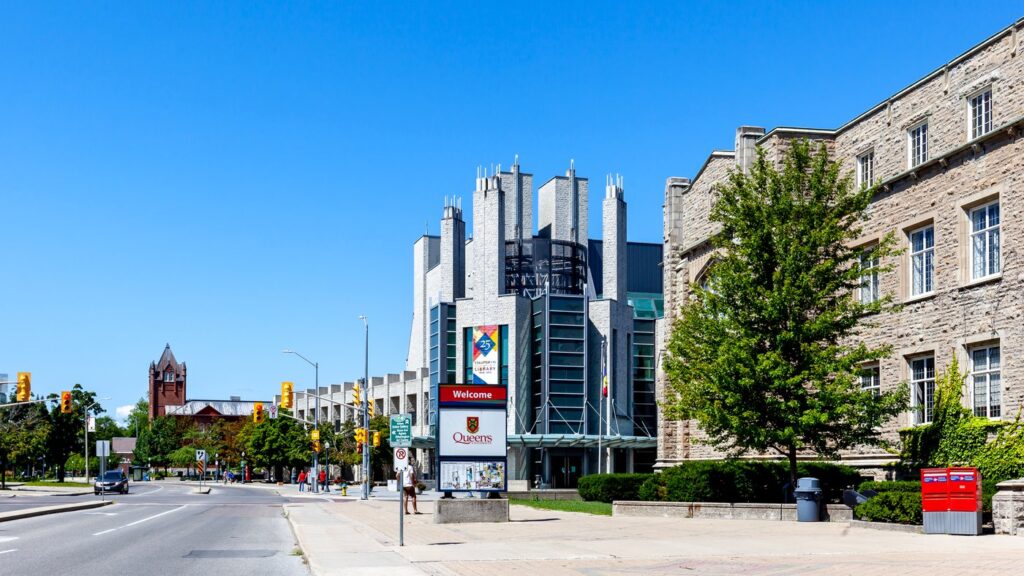
The changes are welcome to institutions in Ontario, including Queen’s University and St. Lawrence College in Kingston.
Following the news on Thursday, Queen’s shared a statement welcoming the changes, sharing the provincial government’s view that changes will help maintain sustainability in the system.
“We are grateful to the Government of Ontario for this renewed investment in higher education,” a statement shared from the university reads.
“This investment reflects the important role universities play in Ontario’s future. Through educating talented graduates, advancing research and innovation, and contributing to vibrant communities, higher education contributes to Ontario’s prosperity and benefits the province in lasting ways.”
Similar sentiments were echoed by SLC CEO and President Glenn Vollebregt, who said the funding commitment signals that the Ontario government recognizes the value in what postsecondary institutions do, and have been doing to prepare workforces and provide value to the provincial economy.
While students in Ontario’s postsecondary system may agree with the positive impact of higher education, student unions in the province were dismayed to learn that new funding appears to be coming at primarily their own expense.
Ontario Undergraduate Student Alliance (OUSA) released a statement welcoming the new funding and “measured strides” when it comes to tuition hikes, and particularly commended the commitment to fund 70,000 in-demand seats.
OUSA highlighted concerns however about the changes to OSAP, with President Sayak Sneddon-Ghosal saying students already burdened by loans are going to see the problem become even worse in the future.
“We are concerned about the continued shift within OSAP from grants to loans, particularly how it risks disproportionately impacting students from various socioeconomic backgrounds,” Sneddon-Gosal said.
OUSA recommended a comprehensive review of OSAP eligibility to ensure “a proportional increase in access to assistance and in the amount of assistance” and that the province implement a no-interest loan program.
In Kingston, the union representing grad student workers -PSAC 901- had harsher criticism for the changes to OSAP.
Elliot Goodell Ugalde, VP of Community Relations for PSAC 901, said the union strongly opposed the announced funding changes and that a tuition hike combined with the impending cuts to OSAP grants will put an unfair burden on young people who already face record high unemployment rates in Ontario.
He said the changes will disproportionately affect some including first generation and racialized students and serve to put more barriers to accessing postsecondary education.
“Allowing tuition to rise by up to two per cent each year while pushing students toward more debt means many will pay thousands of dollars more over the course of their education. For students already struggling with rising rents, food prices, and stagnant wages, these so-called “modest” increases create serious financial pressure and long-term insecurity,” Goodell Ugalde said in a statement.
“Colleges and universities need stable public funding, but that funding should not come at the expense of accessibility… PSAC 901 is opposed to these changes and calls on the provincial government to reverse the cuts to OSAP grants, restore meaningful non-repayable aid, and maintain strong tuition controls.”
For its part, Ontario says the tuition changes will only result in an additional cost of $0.18/day for college students and $0.47/day for university students, while low-income students will have this cost absorbed through an enhanced Student Access Guarantee (SAG).




