


When Tashina Morgenstern crossed on foot into Ukraine this past March, she was hit with a wave of emotion strong enough to bring her to tears. It was the first time the Fort Frances operating room nurse—a third-generation Ukrainian-Canadian—had set foot in the country her family left behind generations ago.
Two aid workers travelling with her didn’t miss a beat. “Welcome home”, they told her. “This is your other home.
Readers with keen memories may remember Morgenstern from a 2023 story in The Times about a surgical mission she volunteered on in Guatemala. Since then, she’s spent two years travel-nursing in the United States, work that led this spring to a week-long mission in Lviv with the Connecticut-based nonprofit Healing the Children Northeast and Razom for Ukraine, a New York- and Kyiv-based charity whose name means “together”. She was in the country from March 21 to 29 this year—the only Canadian on a mostly American team.
The invitation came through a Pennsylvania hospital, where Morgenstern was travel-nursing alongside Dr. John Frodel, a surgeon who has made several missions to Ukraine himself. Conversations in the operating room quickly turned to her Ukrainian heritage, from Christmas traditions to her baba’s homeland outfits, and when she asked what it would take for a nurse to join a mission, Frodel made a call.
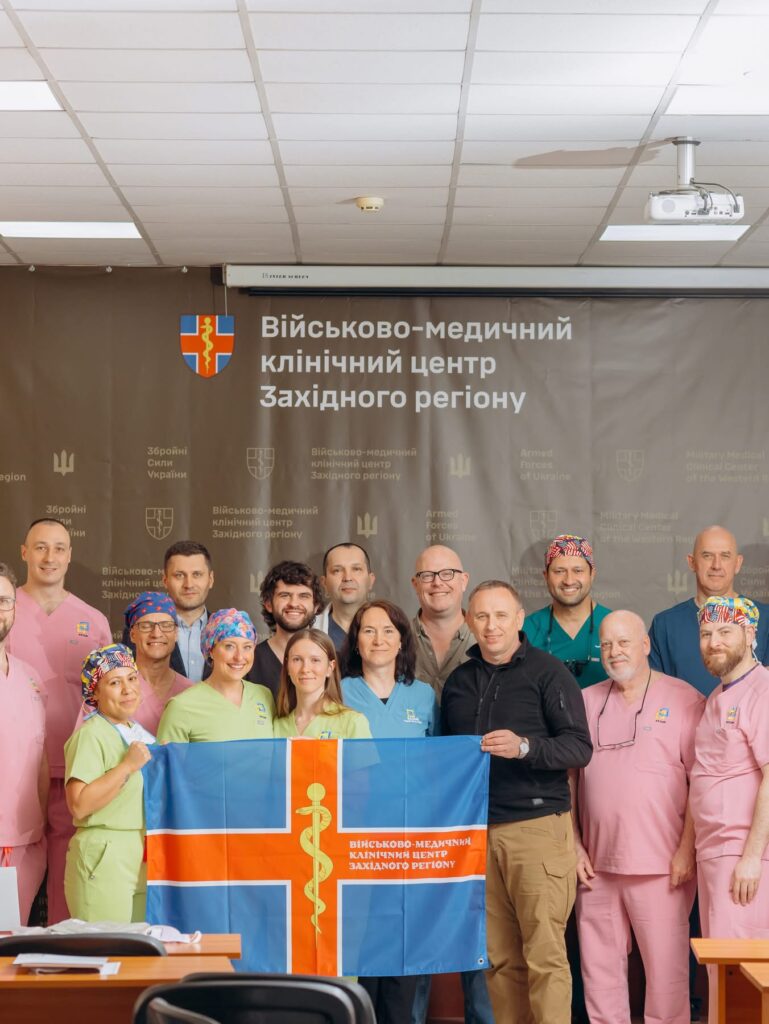
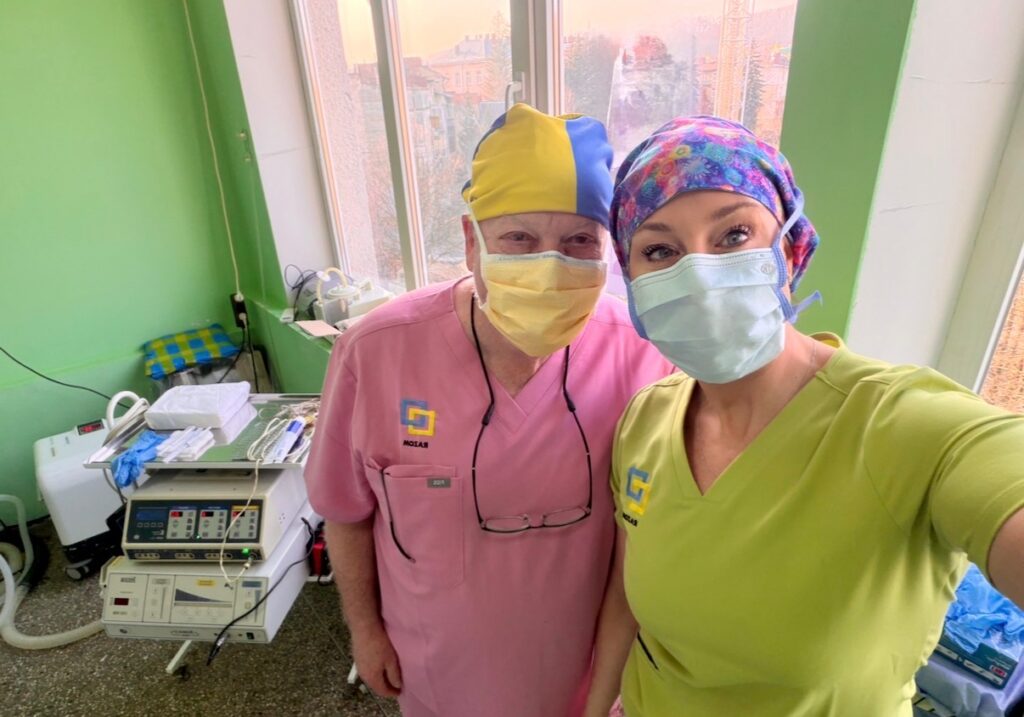
In Lviv, the team worked out of the Military Medical Clinical Centre of the Western Region, running three operating rooms from 7 a.m. to 8 p.m. and completing 40 operations in a week. Facial reconstruction, maxillofacial surgery and ophthalmology were cited as being among the most complex.
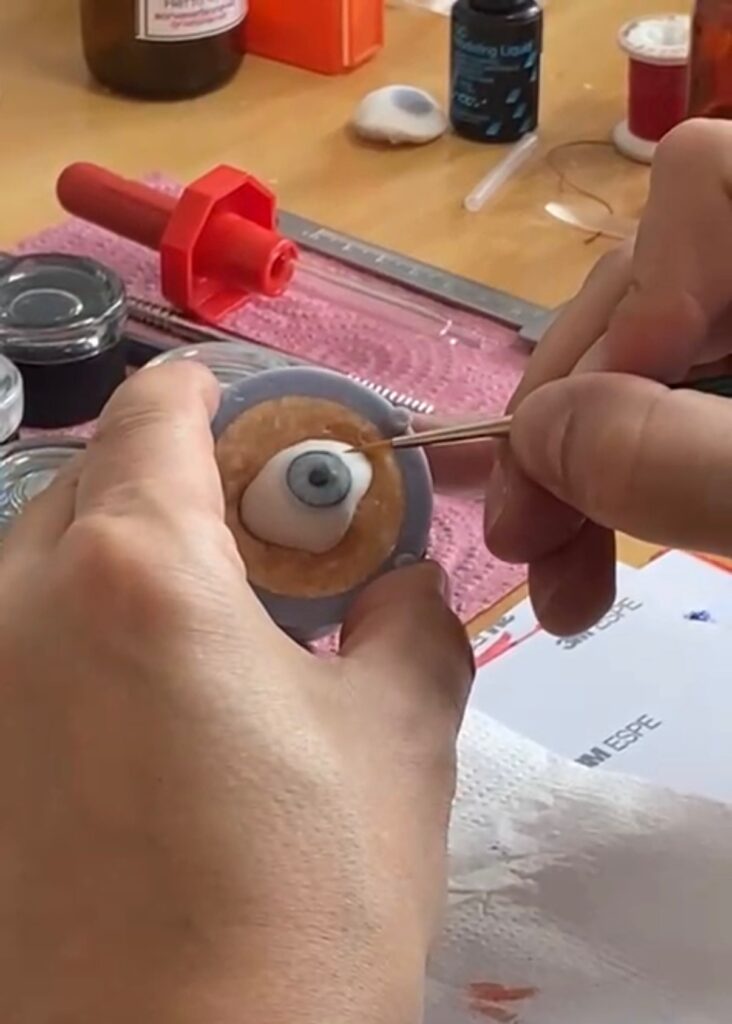
Two anaplastologists travelled with the team this time, hand-painting prosthetic eyes to match each patient’s remaining one. “It wasn’t just physical”, Morgenstern said. “It was also the mental aspect—helping people see themselves as whole again”.
The mission wasn’t without danger. Early in her stay, Lviv was hit by one of the worst missile attacks the city had seen to that point, triggering an air raid alert and sending the team rushing down into the hotel’s shelter. Later that day, a second raid, this time taking place mid-surgery, forced them to the hospital’s bomb shelter for several hours.
A missile struck less than a mile away, at the very same cathedral the team had visited the day before. “It’s real”, Morgenstern said of the war. “The next day, people are back to work. They clean up and keep going, because what else can you do?” Every morning at 9 a.m., she said, the whole city stops—traffic, pedestrians, everyone—in silence for the dead.
Morgenstern struggled to compare the mission to her 2023 trip to Guatemala. “The workload was heavier, and it hit differently,” she said. “I was emotional every day.” Her mother and brother knew before she left and were worried, especially after news of the large-scale attack on Lviv reached home on March 24. She called home that night to let them know she was safe, and that she was already planning her next mission.
Asked for the hardest moment, Morgenstern reflected on those tense hours spent in the shelter, where she’d brought Canadian flag pins to hand out—a small way of representing Canada alongside her mostly American team. A boy of about five accepted one, after checking shyly with his mother first. As Morgenstern turned to leave, she felt a poke in her arm: he was holding out a banana, the only thing he had to give, and said dyakuyu — thank you in Ukrainian. “That’s what he had to give me in that moment, you know?” Here’s this child and this is their reality; this is their everyday life.”
Morgenstern found the mission’s most rewarding moments lay in what could still be restored. “Despite everything that’s happened, there were these little moments where it’s still very human”, she said. “We’re all just together, taking care of each other”.
For Morgenstern, that reward came in seeing the results of the team’s work on patients who had suffered devastating facial injuries and later receiving photographs showing their continued recovery. “At the end of the week, looking at what our team had done, and then seeing follow-up photos since of the healing process—it’s incredible”.
Morgenstern is already watching for her way back, with a mission tentatively planned for next spring. “Ukraine is absolutely beautiful”, she said. “The architecture, the culture, the people—they have the best hearts. It’s just unfortunate that this is how I finally got to see my homeland. I hope this war ends so people can go see it for themselves”.
Those interested in supporting Morgenstern on future surgical missions can donate through the following link: htcne.org/ways-to-help/donate/. Press “Donate Now,” select “Use this donation for specific team member,” and enter Tashina’s name in the comments. Any donations can help offset the cost of her airfare and other expenses for future trips.





