


The Fort Frances Times welcomes Will Brooks, the latest addition to our editorial staff. We asked Will to give himself an introduction in his own words. Will currently resides in Ottawa, but will soon be joining us in Fort. – Editor
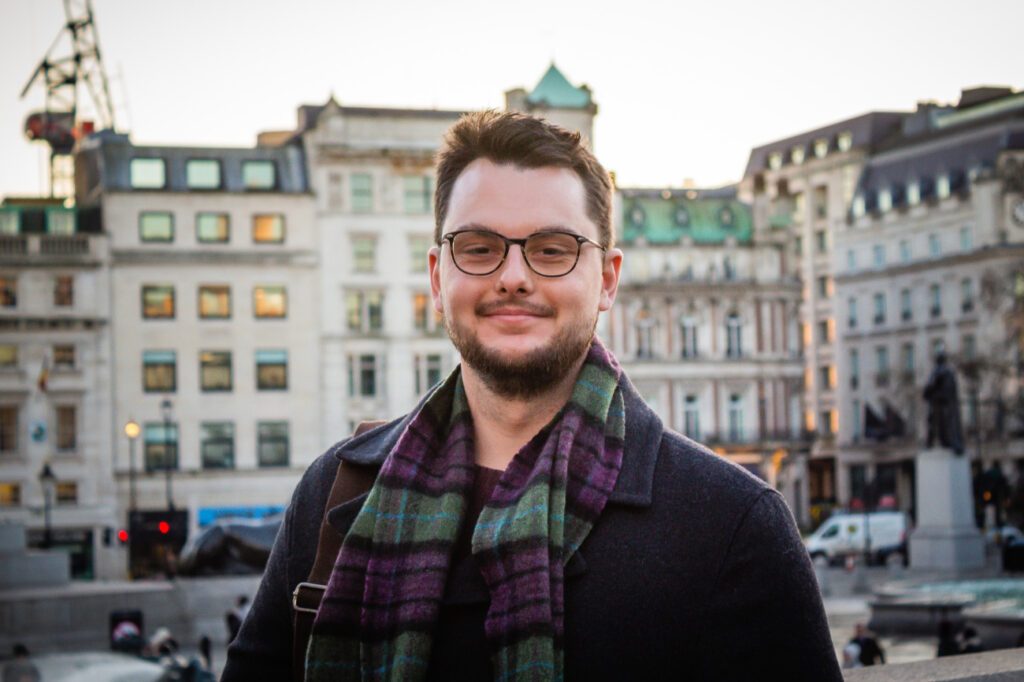
My name is Will Brooks. I am 32 years old, and before anything else happened to me, I happened to East Wittering—a somnolent village on the English coast. Growing up there gave me an attachment to small town life that I probably did not appreciate at the time: the familiarity of seeing the same faces, the accumulation of local stories and shared memories, and the quiet understanding that living in a community means taking a healthy interest in the people and issues around you.
Everything since has been, in its way, a search for that same lesson. For the past five years, I had been in study at the University of Portsmouth writing a doctoral thesis on the Canadian Army’s sojourn in wartime Britain.
My inquiries began in dusty archives, wound through the cemeteries of France and Belgium, and eventually deposited me in Ottawa, sifting through the paper remains of a war fought in part to defend the kind of parochial decency I had grown up taking for granted. Somewhere in that long detour I acquired an affection for Canada that no thesis committee required of me.
Canada also furnished a discovery no archive could have: my long-term partner, whose career is the actual reason we arrive in Fort Frances this autumn, and I have somehow contrived to turn several years spent writing about Canadians into a living writing for them.
On paper, East Wittering and Fort Frances share almost nothing. I arrive, for all practical purposes, a fish so far out of water that it conjures the image of a trout flopping feebly in the dunes of the Sahara.
A quick roll call is in order: I cannot fish, cannot hunt, cannot skate, have never changed a winter tire, have never touched a snowblower and still don’t understand what icing the puck means. Fort Frances, I suspect, has considerably more to teach me than I have to teach it.
At least on the one point that truly matters, I may yet prove a surprisingly quick study. My training taught me that history is rarely made by those who sign the treaties; it is made, and remembered, by the people who wrote the letters nobody thought to save.
Local journalism runs on the same principle—every town holds stories that vanish unless somebody asks, listens, and writes them down. I hope, over the coming months, to learn the Rainy River District—its people, its businesses, its old quarrels and older traditions—and considerably more about fishing than currently seems plausible.
I will ask foolish questions, being new to both this town and, in several respects, this country; fortunately, journalism is among the rare trades in which foolish questions are not merely tolerated but encouraged. Winter, I am told, will complete my education.
Mostly, though, I want to meet people—that remains the whole point of the exercise. So do stop me: correct me, suggest a story, or tell me what I have misunderstood about Northwestern Ontario, and I promise to listen.
Should there exist, anywhere in the district, a fellow enthusiast of Comet tank engines or the Spitfire’s finer eccentricities, we will get along famously; everyone else, I promise to spare the details. I look forward, before too long, to calling Fort Frances home.





