


Writer Mackenzi Fisk, a leader of the Pictograph Community Arts project, lost her residence in the Factor Lake fire. She offered the following reflections….
“Do you smell smoke?” my neighbour asked. He’d just climbed down the ladder after patching a leaky spot on my shed roof.
“Maybe someone having a sauna,” I suggested.
We scanned the sky and spotted a plume of smoke rising above the treeline. Flakes of ash landed on my shoulder, and my heartbeat quickened. It was clear. That was no nearby sauna fire, and it was coming straight for us. With today’s unusually high winds, it wouldn’t be long.
Many of us think we’ll be calm in a situation like this. I certainly thought so. My wife and I were both retired from careers in emergency services. We’d seen firsthand what kind of decision-making errors urgent situations produced. That wasn’t going to be us. We knew exactly what to do. We were prepared.
Back in 2013, when we lived in Alberta, we got a personal lesson during the Calgary flood. We knew we lived near the flood zone and monitored the rate at which the water was rising, calculating the risk hour-by-hour. We had our kids pack their little suitcases and stand them by the door in case we received the evacuation order. I battled panicked traffic to get a case of drinking water from the store. We kept the radio on and were reasonably assured there would be time to get everyone to safety.
We were lucky that time, and the water receded before it got too close. Everyone got a good night’s sleep afterward, and we began the habit of keeping a list of what we would need to take if we had to go in a hurry. We confidently patted ourselves on the back. A job well done, right?
When we moved to Factor Lake the annual summer forest fire threat felt a little more real. We upped our emergency preparedness and put together a Go-Bag with basic necessities in case we had to leave our home quickly. I stuffed all the supplies into a big orange duffel bag and stored it in an easy-access spot. Toilet paper, water jugs, emergency shelter – you know the list.
Five years ago, a nearby fire came close enough to singe the trees at the top of our access road. Luckily, we were out of town, and we privately joked about that Go-Bag sitting there, unneeded, on the shelf. One forest fire had already been and gone. What were the odds it would happen again in the same place?
But I kept the bag packed and refreshed it from time to time, attaching a reminder list of important items to the handle. We were more than ready.
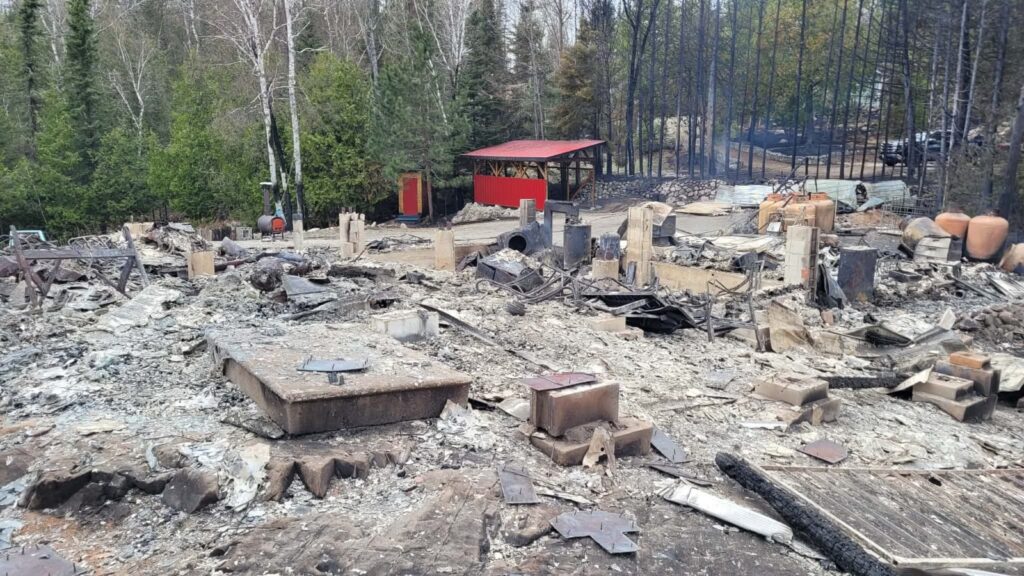
On May 15, just after noon, a second forest fire raged through the trees at Factor Lake. Our neighbour went to see if he could help. Smoke and ash increased, and within mere minutes there was no question. We needed to evacuate right away.
Still confident, I calmly went into the house for the car keys. I called to my wife to remind her to grab her medication and picked up the Go-Bag by the handle. Without even looking at it, I actually wrapped my hand around the taped-on reminder list and hauled it out to the car.
We slowed down just long enough to check that a senior neighbour was getting out and had to drive over a fallen tree blocking the road. By the time we reached town, we had begun receiving messages from friends and neighbours.
“Your shed is on fire. The propane tanks blew and your house is on fire. Your guest cabin is gone. Now the sauna is burnt. It’s all gone except the outhouse and maybe the carport. How strange.”
You can do all the right things to try to be ready, but there is just absolutely no way you can count on being perfect. We did most of it right. Our insurance is valid, and we pray it’s enough to cover the loss. We always kept a little stack of emergency cash along with our passports in a pocket of the Go-Bag. That’s been helpful.
But I learned a hard lesson that day: If it’s not actually in the bag, it’s probably not coming. With things happening fast, there is no time to stop and examine a checklist, let alone run around the house to gather the items on it. Do it in advance. Take the time to put together your own Go-Bag, check it from time to time, and know that things will never be perfect. But it can be okay.
We want to thank our family, friends and the people of Atikokan for their love, support and offers to help. We sure have been able to feel that love, and we love you right back.




