
The critically acclaimed APTN docuseries One Dish, One Spoon is back for a second season—with a new experimental style that goes “beyond the kitchen.”
Tawnya Brant, host of One Dish, One Spoon, chef-owner of Yawékon Foods, promised that audiences will get an inside look into the Indigenous food scene in season two.
“It’s following [me] to see what’s cool about Indigenous food and food sovereignty,” Brant said. “This is my rendition of showing other people what that means to me.”
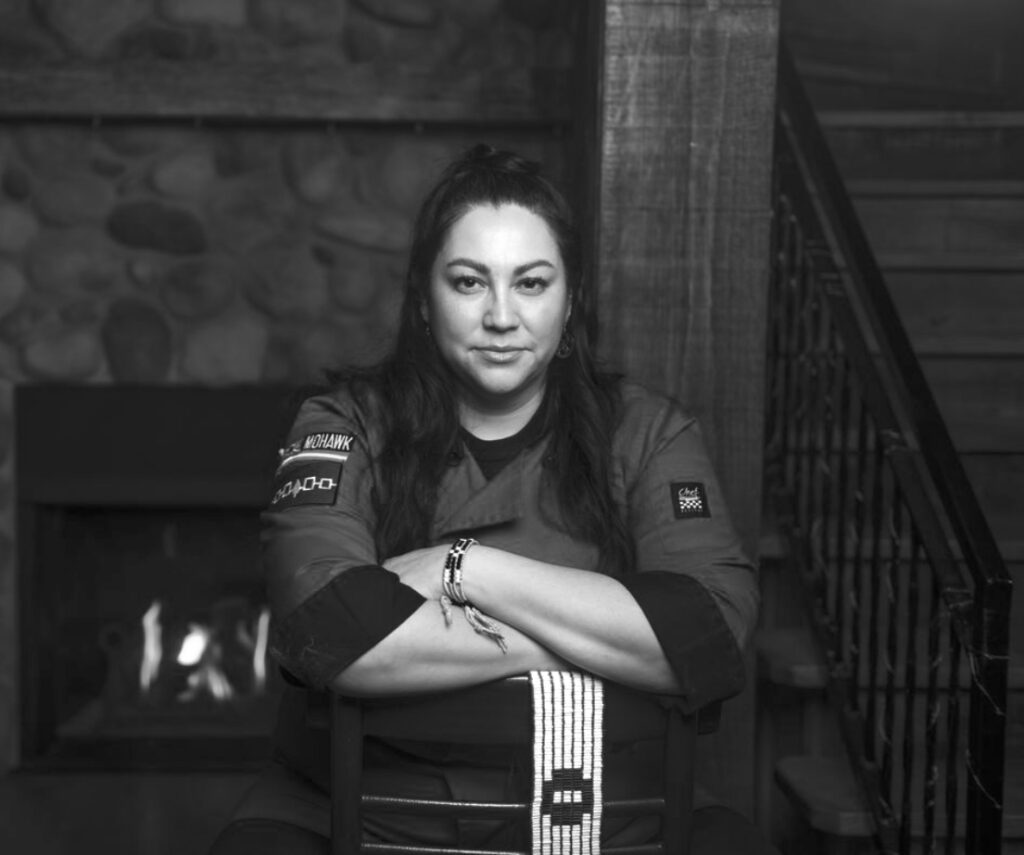
Based on her personal YouTube series, season one of One Dish, One Spoon examined the roles of knowledge keepers in preserving Indigenous cuisine in contemporary culture. Produced under a micro-budget during the COVID-19 pandemic, APTN greenlit One Dish, One Spoon for a second season halfway through filming season one. But the network decided to change genres from a documentary to a docu-soap series, according to Brant.
“I think APTN thought the things I was doing were cooler than the people I was covering,” Brant said.
Season two shifts its focus to Brant’s personal and professional life, exploring the average day in the life of a Haudenosaunee chef over the course of a year.
“You get to know my family, my husband, my kids and my sisters,” Brant added.
This season, Brant and her family will meet with the mothers of professional women’s lacrosse players, lend a helping hand to an Ontario Court judge looking for new ways to use his Pawpaw vineyard and cook a communal meal at the Kahnawake Fall Harvest Festival. For the latter episode, Brant reached out to Brooke Rice, an old friend of her mother.
“Knowing who her mother is … it’s naturally embedded into who she is,” Rice said. “She’s not just a chef. She’s connected to the food, the ceremonies, all the cultural components of what it means to be a seed keeper and a knowledge sharer.”
But Brant didn’t always see herself as a teacher: “My mom was a teacher, so I used to always fight her on it.”
Brant’s mother encouraged her to start cooking with Haudenosaunee ingredients, although her lessons never went beyond the basics. While a student at Sir Sandford Fleming College, Brant worked in the kitchens of local restaurants, where she discovered her passion for cooking. She left college early to open her restaurant, Yawékon, in 2020, but closed the front desk soon after shooting for season one of One Dish, One Spoon began.
“We ran on profit; almost no Indigenous restaurants do that,” said Brant.
For Brant, her goal is that the average viewer, Indigenous or non-Indigenous, will leave One Dish, One Spoon with a new respect for the Indigenous food scene and the people preserving it.
“I didn’t want to sell the ‘I’m a poor Indian’ [story],” Brant said. “I want people to be like: that’s the coolest culture I’ve ever seen.”
Brant said every episode of season two will feature four-and-a-half minutes of Kanien’kéha, with a fully dubbed version available this fall. She added that, given the limited number of fluent speakers, this posed to be an “incredibly hard” challenge.
“Nothing like this has ever been done before,” Brant said. “The most incredible thing is to be able to see our people get their flowers and be able to hear their language on TV.”
While exploring various plot lines, season two’s emotional climax will center around the unexpected illness and passing of Brant’s mother.
“I haven’t even seen the whole episode yet,” Brant admits. “I think the production company just didn’t want to trigger me too much. It’s going to be a tear-jerker for me for sure.”
Looking back, Brant realized that, in a way, she has become a teacher like her mother: a teacher of chefs.
“I’m helping other Indigenous chefs find their way,” Brant said.




