

Energy is a strange thing.
We contain it. We use it. We even use it like rocket fuel when we need. We only have a finite amount to use each day.
However, it is not uncommon for a person to give one’s energy to others who may not be very deserving of such attention or energy or thoughts that accompany them.
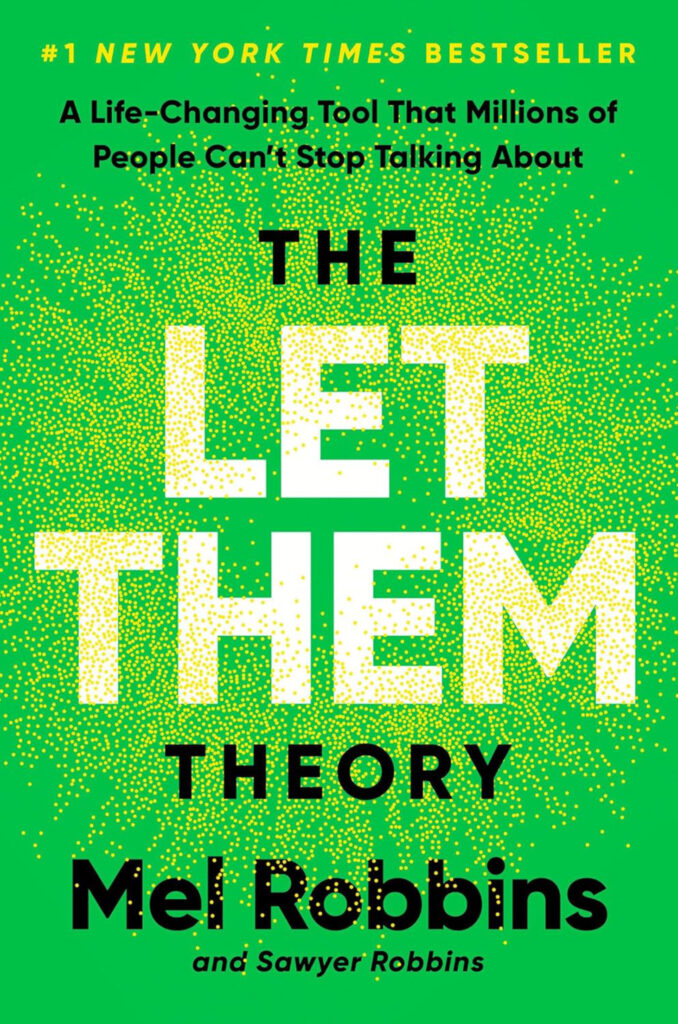
In The Let Them Theory, Mel Robbins offers a different approach to ensure one’s wellbeing, growth, and sanity remains where it should be: Held, appreciated, and used for what it is meant for (navigating life, success, happiness, and meaning) rather than potentially squandered.
It is a delicate balance between “let them” and “let me.”
It is intensely easy to get wrapped up in the currents and still waters by another—be it their criticism, judgement, gossip, sharp words or even another’s thoughts.
Rather than getting wrapped up and knotted together because of someone else’s critique, words, actions, or thought (which is intensely easy to do), the key is to let those crows fly, be loud, be disruptive, but not let them ruin your peace.
How?
“Let them.”
Picture a guiding light from a Yodaesque friend or mentor showing you a piece of paper with 20 people sketched on it. They circle the person in the middle after being told it is you. When asked, “So, of this entire drawing, what are the only things you can control?” of course, only oneself and things in our immediate rotation of the compass.
Give no quarter, nor a dose of energy, nor moment of time, nor effort to try put a stop to such chaos. Anything else is time unwisely spent and energy discarded that could go to things to improve one’s own life.
The key is understanding that a person cannot control another’s behaviour, words, or thoughts. As much as one may desire to react, alter trajectory, soften another’s disposition, or try to turn brackish water into wine from a good year, the wisest move is to quiet one’s emotion, not to give it the time of day, and repeat the words “Let Them” in the wake of their storms.
Anything else is a cost too great, according to Mel Robbins.
Rather than reacting (either negatively or positively), focus instead on yourself.
You cannot control others’ words, thoughts, or actions. Trying to do so spends energy you do not have.
Let them act as they will.
Then choose your response.
Let me protect my time. Let me set boundaries. Let me direct my energy where it matters.
This shift reduces anxiety, restores agency, and clarifies what is worth your attention.
Let others act, say, do, and think as they wish—as they likely will anyway.
The trick is redirection.
Even if others judge, ignore, exclude, make errors, or be who they are.
“Let them.”
Like a lifting velvet fog, efforts of attempted control and emotional friction are reduced and begin to vanish.
It is not our job or responsibility to manage, convince, control or temper another’s words, actions, thoughts, feelings or critique.
Instead, let them.
If they are not critiquing you, they’d likely be doing the same to another.
It’s not confidence or strength of character, often it is comparison, insecurity, jealousy, or resentment.
Reacting or trying to sway such things is a waste of time.
Instead, pivot on your blessings.
Let them do what they will.
In turn, “Let me”.
Let me walk away, protect my time and energy, choose how I react, and set boundaries in exchange for reaction.
According to Robbins, not only does this honour one’s peace, but it protects overspending one’s energy on things that (at the end of the day) are not worth one’s time.
One cannot control others’ behaviour, thoughts, words, or actions.
One can only control their own actions, interpretations, and road they will continue to follow.
Let them do what they want to do. It is none of our concern.
In turn, let us anchor our resolve, know our worth, and never surrender another moment of sleep, ounce of worry, or payment of thoughts that last more than a moment.
The effects of this approach are threefold.
First, one experiences less anxiety and overthinking about someone else.
Second, one’s actions protect autonomy as they are guided by intention rather than reaction.
Lastly, boundaries are further established as negotiations between one’s intention and what one can (or can’t) change become clear and much less abstract or wishful.
Always tending to one’s peace is crucial.
At a time when personal or professional comparisons, jealousies, insecurities, or resentment are often the ghosts in the machine generating gossip, criticism, or immature behaviours, Mel Robbins’ work is not only timely but also needed.
I found her book both enlightening and reassuring—a reminder that the stirring emotions by another’s words or actions are commonplace—but can also be a turning point of engagement, where giving up one’s peace of mind and soul is non-negotiable.
Keep living. Keep succeeding. Keep smiling.
In a world driven by comparison, insecurity, and constant commentary, choosing not to engage is not weakness—it is discipline.
Protect your energy.
Anchor your worth.
Let them be who they are.
Let yourself be who you are meant to be.
Today (given the international matters happening), I will be starting The Cult of Trump by Steven Hassan and will submit a review for the April 1 edition of the Times.
Wishing you all a stellar weekend ahead.
Robert Horton is an educator, author, orator, and linguist. He is a member of Rainy River First Nations.
Hay House, 336 pp., $29.99




