


(Editor’s note: A member of the Times family, our frequent contributor Henry Miller, passed away last week at the age of 90. According to family, Henry wrote this column just a few days before passing, with the intent of walking it down to our office so we could publish it, as was his custom. We are honoured to be able to publish Henry’s final bluebird report.)
In 1990, a plea went out to help bluebirds. They were disappearing. They could not compete with other birds such as house sparrows and starlings for nesting.
The Sportsmen’s club decided to help. Forty birdhouses were built and put up on fence posts in the district. No bluebirds used them the first year but once the bluebirds found them, some nested.
In the years that followed, more boxes were set out but the population went up and down. Last year, for example, almost all the nestlings died due to the cold, wet weather, and the adults disappeared. But this year, the population exploded: 104 fledged, four died, and three eggs did not hatch. In addition, at least three of the bluebirds are having a second brood.
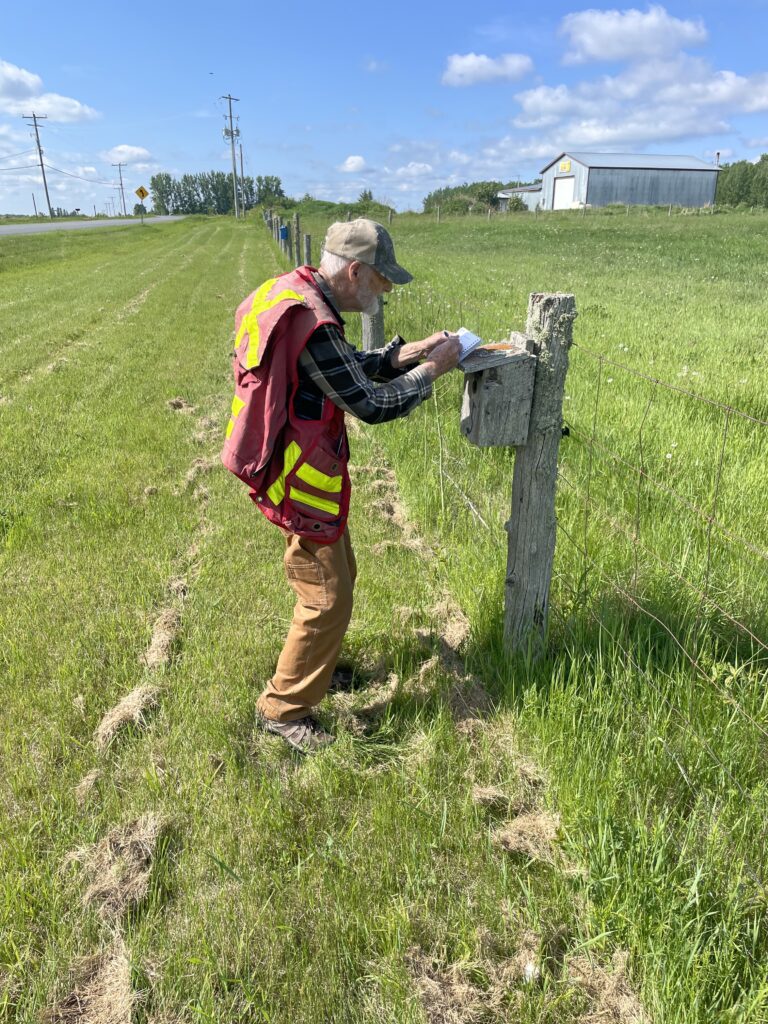
It is interesting what one can see when motoring along the sideroads monitoring the birdhouses. As I drove along one stretch of Busch Road, I spotted a sharp-tailed grouse in the grass. I moved over to the opposite side of the road to snap a photo of it. With the camera ready, I stepped forward when the gravel by my feet seemed to move. Looking down, I observed a dozen chicks crossing the road and disappearing in the grass behind the adult.
These chicks probably crossed the road and came to swallow tiny stones which are used to help digest their food.
I took a step forward when the mother stretched her wings and few back and forth between me and the chicks. I retreated. Then she flew into the bush and made some kind of signal, and all the chicks fled to the safety of the bush. Sharp-tailed grouse prefer open fields like pastures, meadows, and sometimes bogs.




