

The first thing you should know about Ang Braun is that she does not like being told “no.”
This is not a mild, shrug-and-walk-away kind of dislike. This is a kind of “oh-yeah-watch-me” defiance, tempered by prairie politeness but sharpened by 20 years of listening to women tell her what it took to run from someone they once loved, and sometimes still fear.
Braun runs Genesis House, a women’s shelter serving a constellation of small Manitoba towns including Rosenort, Altona, Emerson, Morden, Winkler, Roland, Morris, Carman, Pilot Mound, and Manitou.
The shelter has five bedrooms. That’s how many families it can take in at a time, in a region where domestic violence statistics would keep you up at night. Last year, of all the women who passed through Genesis House’s doors, only 16 percent found housing after leaving. The year before, it was 12.
The rest? They often went back to family which sounds hopeful until you understand that “family” can be the waystation before going back to the partner who hurt them. “We know,” Braun says flatly. “We know that’s where it often leads.”
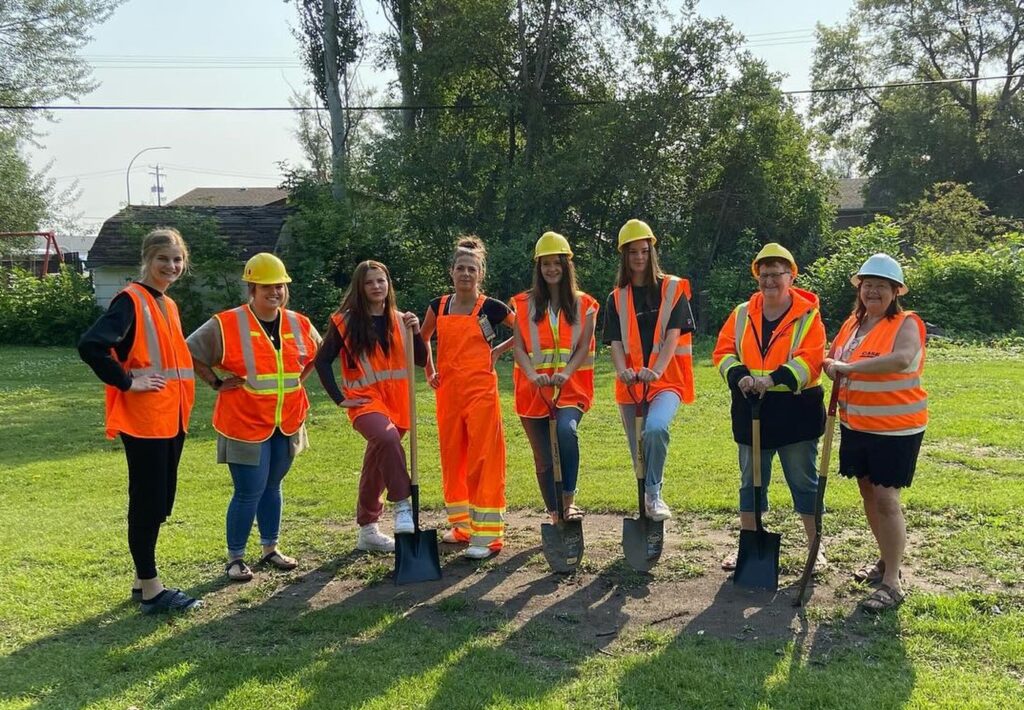
That’s the backdrop for what happened on July 28: Braun and her team stood on a piece of land with ceremonial shovels, not quite breaking ground (that’s scheduled before summer’s end) but blessing it. It will be the site of 25 transitional housing units, opening in 2027. One-bedroom units for women whose budgets would make your chest tighten. Two-bedroom and three-bedroom units for single mothers with multiple children. A big common room. Childcare on-site. Counseling and group work baked into daily life.
And hopeful stubbornness baked into the walls.
Because here’s the thing: five years ago, there was a federal grant program to build rural transitional housing for survivors of gender-based violence. Genesis House applied. They were rejected.
This was supposed to be the part where they sighed and went back to business as usual. Instead, Braun’s board did something equal parts reckless and inspired: they bought land.
It was a leap of faith.
Since then, local contractors have bid on tenders with donations folded into the price, essentially saying, “We want to win this job, but also, we believe in why you’re doing it.” The provincial government is circling, though Braun can’t yet talk about it until the contract ink dries.
Why do this? Because leaving an abusive relationship isn’t a single act, it’s a long, ragged process. On average, it takes a woman six or seven tries before she leaves for good. And when you’ve been told for years that you can’t survive without the person who hurts you, the weeks in limbo after you escape can feel like proof they were right.
That’s the hole Braun wants to fill. The space between running away and running toward something.
She’s seen the model work. Genesis House already operates a single “second-stage” home in Winkler. Almost every woman who’s gone through it has stayed away from abuse afterward. “We know it works,” Braun says. “We’ve seen it for 35 years.”
The July 28 land blessing, she says, “felt like a big hug.”
For now, the project doesn’t even have a name, they’re still looking for something short, resonant, and easy to spell. But Braun knows what it’s for: a place where survivors can see their new lives starting, rather than watching the old life creep back in.
The first families are scheduled to move in January 2027. If you drive past the empty lot in Winkler today, you’d see nothing much, tree stumps, grass, and sky.
But if you stand with Ang Braun, you’ll see the walls already up, the doors already open, and a network of survivors are beginning to look forward to the future again.




