


The Manitoba government is turning to Western Canada’s oldest newspaper to teach students how to debunk misinformation and master other necessary skills for the digital age.
The department of education is partnering with the Free Press and Winnipeg School Division to launch a media literacy platform with lessons on the tenets of journalism, algorithms and related subjects.
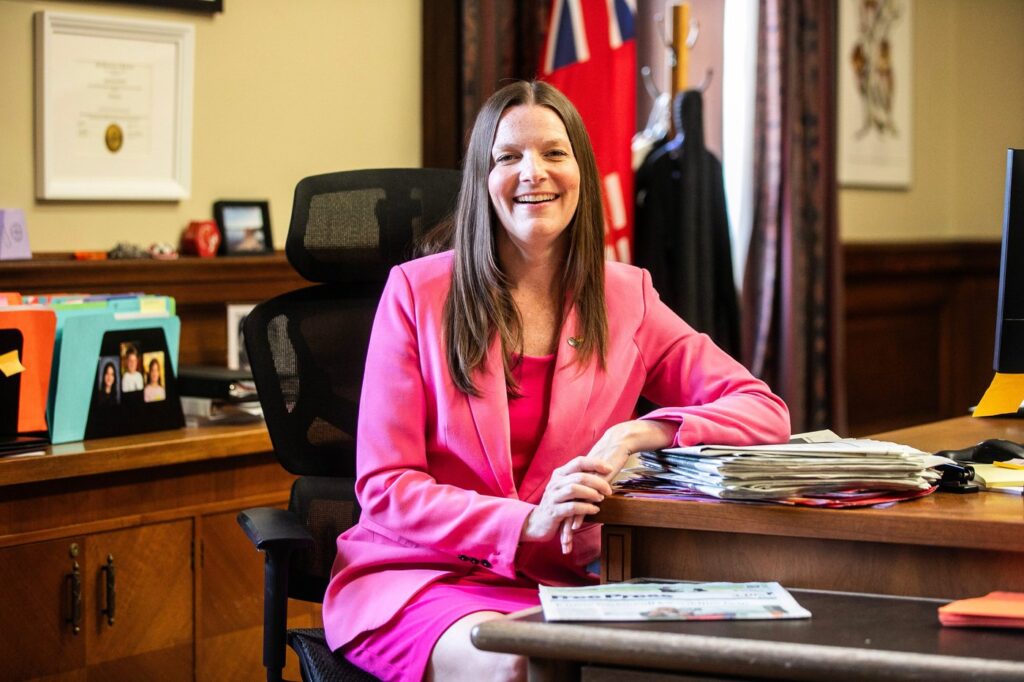
“A media literacy refresh” is necessary to respond to massive changes in how and where Manitobans consume information, said Tracy Schmidt, minister of education and early childhood learning.
“Kids are really at the forefront of that change, and I can attest to this as a mom,” Schmidt said, noting she’s had to personally intervene and re-educate her own three children on topics they’ve “learned about” via YouTube celebrities and other corners of the internet.
Local teachers are designing the platform — with input from multimedia journalists and information technology experts — for their colleagues in kindergarten-to-Grade 12 classrooms.
The free curriculum-based resource will be available via winnipegfreepress.com. A beta version is anticipated to launch in early 2026.
The final product is anticipated to include multiple web pages to simplify lesson planning, help schools launch newspapers of their own, and offer a self-study media literacy course to teachers.
The minister said the new partnership is a fitting one, given her department and the Free Press have similar goals in that they both educate the population and want to build media-literate citizens.
The work officially got underway in September, under the direction of Schmidt’s late predecessor. Nello Altomare, 61, was a career educator and news hound who followed current events closely until his death on Jan. 14.
The provincial government and the largest school division in Manitoba have each hired a certified teacher. The duo has set up an office in the Free Press newsroom in Winnipeg.
“We live in an age where there’s more media than ever and yet less media literacy,” said Mike Power, chief executive officer of FP Newspapers Inc.
“The Free Press is delighted to be part of this important initiative, which will use our journalism as a teaching tool to inform and empower Manitoba students so they are better equipped to navigate an increasingly difficult digital landscape.”
The platform is being designed to host a database of ready-to-use learning experiences that match relevant news stories to curriculum outcomes. The former will not be exempt from a paywall.
These interdisciplinary packages, dubbed “resource bundles,” are being organized under media literacy topics, such as data and privacy, propaganda and responsible use of artificial intelligence.
Teachers will eventually be able to screen explanatory videos hosted by local journalists and assign students to read articles and whose contents can be translated into any language and adjusted to accommodate their reading level.
A student newspaper incubator will, through a customizable template, allow students to create their own media outlets and have their stories published on the platform.
The third and final element is a micro-credential in media literacy for educators. Successful graduates will earn a digital badge.
The project is inspired by Journalism for All, an initiative to bring journalism education to all high schoolers in New York, as well as newsela.com, bookcreator.com and the New York Times Learning Network.
The local partners have applied for a $100,000 community grant to carry out their vision to expand on the Free Press 101 resource.
“This is a project urgently needed to disrupt the momentum of misinformation and strengthen Winnipeggers in their personal agency and ability to discern truth, restoring trust and confidence in institutions of media, government, democracy and education,” they wrote in a submission to the Winnipeg Foundation.
Schmidt said her hope is that Manitoba students will hone their critical thinking and media analysis skills, as well as understand how they can personally produce media in a responsible manner.
“If you talk to any kid these days and you ask them what they want to be when they grow up, they’ll tell you they want to be a social media content creator,” the minister said.
“Knowing that’s what kids want to do, we need to make sure that they are being responsible actors.”



