While the mild fall has been welcomed by most of us, it’s nice to see some colder weather creeping in this week, if for nothing more than to freeze everything up so we can enjoy some of our usual winter activities. For ice anglers, we’re getting more options each week for places to fish, but it should be known that the bigger waters and the deep, clear trout lakes still have minimal ice, if they are even covered yet. Some of the shallower, walleye and crappie lakes have enough ice to at least walk out, as do the stocked trout lakes. Hopefully before the New Year, we’ll have good ice across the region.
As it becomes more inconvenient to use and transport live bait for fishing, using artificial lures will continue to become more popular with anglers. There are also select waters across the Sunset Country Region that don’t allow the use of fish or fish parts for bait during the winter months, so artificial baits are the only option. This regulation is most common on the lake trout waters.
During the open water months, I have switched over to fully using artificial baits and they are a now a big part of my arsenal on the ice. It’s not that live bait doesn’t work, there are not many walleyes out there that will turn down a live leech or minnow that is shoved in their face, but with the excellent mapping and upgraded electronics we have today finding fish has gotten easier, which is the biggest challenge that anglers face. Once we find fish, getting them to bite is usually not the hard part.
When it comes to using artificial baits on the ice, the practice is most common with lake trout anglers. Lakers love cold water and are active throughout the ice season. Spoons, bucktail jigs and soft plastic minnow imitators like tube jigs and jerk shads are all proven trout baits. On the days when they’re biting, you can watch trout on your electronics come racing for your baits. Some days they are a little less aggressive and you have to figure out how to move your bait to get fish to react and bite.
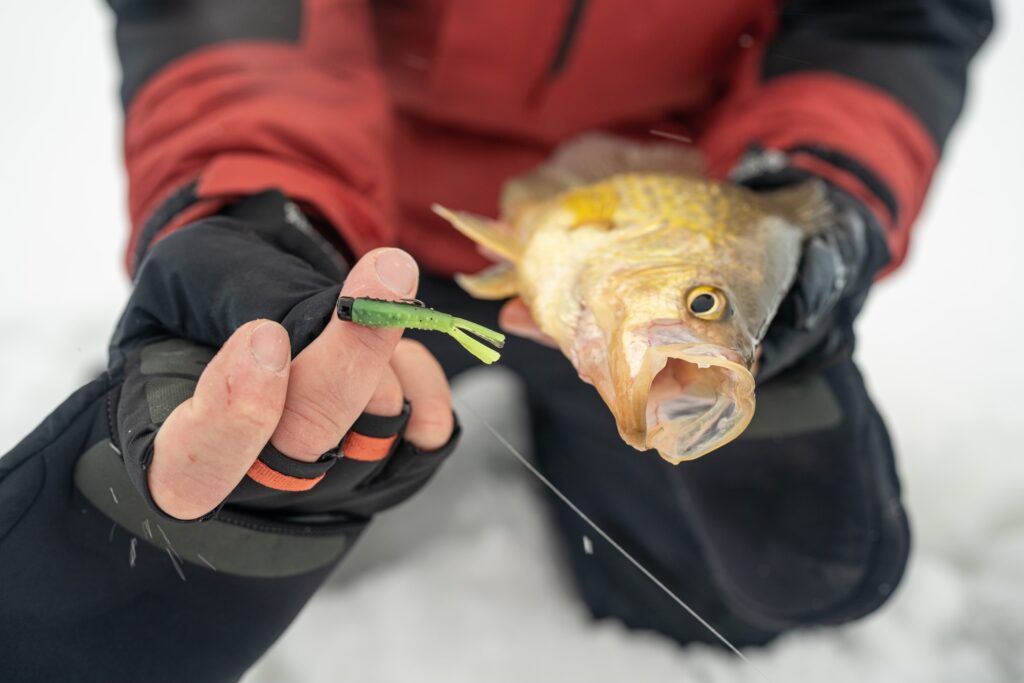
Crappie anglers can do well to tie on a small spoon or swimming jig and tip it with a small, scented plastic bug imitator. Small jigs tipped with micro-sized plastics make a good one-two punch of an aggressive bait and a subtle bait. Try the aggressive spoon first and if crappies don’t bite or react positively to the bait, try the more subtle jig. One thing I’ve learned about crappies is it’s always better to keep the bait above the fish. Make them swim and work for it a bit and they’ll be more likely to bite.
When it comes to walleyes, you can certainly catch them on artificial baits but of all species, they might be the toughest to trick under the ice without the use of meat. I like to use a jigging spoon or swimming jig most of the time and on waters where I can’t use meat or I simply don’t have it, I’ll tip a treble hook on my bait with a small piece of scented plastic but if I have the option, I do like to add a minnow head to my package. That little bit of scent will help you get a few more bites. With the artificial baits, you want to keep it moving a little bit more so that the fish don’t have the opportunity to really inspect in.
Artificial baits will get bites. For most anglers, it’s just giving them an honest shot and then getting a few bites to gain confidence in something different. If you’re unsure of what to tie on the end of your line, don’t be afraid to ask the folks at the local fishing shops, they’ll know the hottest baits on your local body of water.