


New and continuing restrictions brought about by the COVID-19 pandemic have impacted every industry in the country, and transportation is no exception.
With a relative dearth of public transportation options in the region, beyond of the provincially funded OntarioNorthland, any company in the game has had to adapt to the changing times. For Kasper Transportation, based out of Thunder Bay and operating throughout northwestern Ontario and Manitoba, adapting has meant being adaptable both during COVID but also when it comes time to return to normal operating procedures, according to Kasper Transportation CEO Kasper Wabinski.
“Some businesses are designed to not involve physical contact, but unfortunately transportation, restaurants and many other businesses require personal contact,” Wabinski said.
“That makes it difficult and the question we’re faced with is, ‘is this a temporary situation?’ and what do we have to do to survive and get to the other side? Once this is over, the original business model will be back in demand. Transportation right now is being hampered by restrictions or cancelled medical appointments, or people reducing personal contact because of Omicron.”
Wabinski said the challenge is deciding whether or not to make significant investments into changing a business model for temporary measures, as it becomes very difficult to undo any changes if they don’t work when “regular” business resumes.
“You can’t just flip back and forth,” Wabinski said.
“There are commitments you make and you’re stuck with those. I think a lot of business owners, including us, said ‘let’s do our best with that, temporarily.’ For example, takeout food; no one gave up on the restaurant model yet, they are temporarily doing takeout. But takeout cannot replace the dine-in experience. We don’t go to restaurants just to eat, we go to experience an atmosphere, change of environment, interactions.”
Wabinski said the same principle extends to bus and transportation services, noting that their business provides transportation, but attempts to do so in a convenient and comfortable manner.
“Busses are not just transportation from A to B,” he said. “I’m trying to provide it in a way that’s comfortable to the passengers so they can enjoy it. They can see value in the fact that they can take a bus instead of drive a car for five or six hours in the weather.”
So rather than trying to reinvent the transportation model for COVID times, Wabinski instead doubled down on his equipment and technology, using his funds to make sure everything was top of the line and ready to go when lockdowns finally end.
“You can’t reinvent the model,” he said. “I can’t teleport you. I can’t just say ‘no more busses.'”
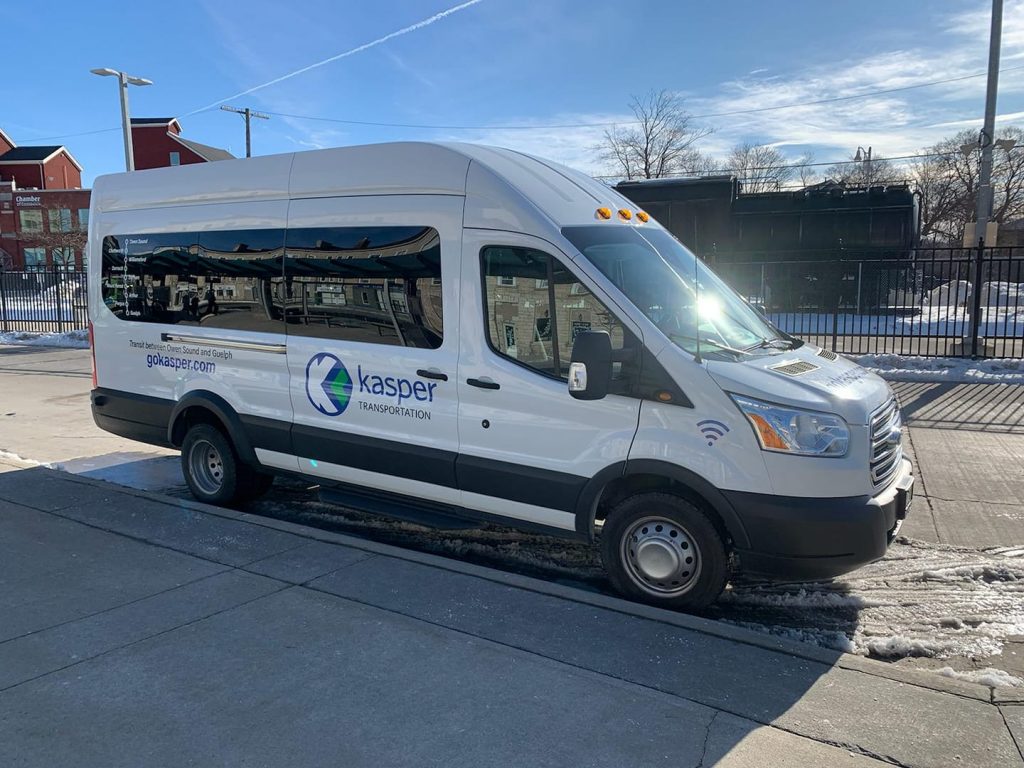
Wabinski noted the price of their service has gone up due to the increased costs associated with the pandemic and running busses with less customers, but he insists his ticket prices are still not as high as they could be, and says their prices are still more reflective of the true costs to the industry than Northland’s prices, who are government funded. Wabinski alleges the province lost $200-million in 2021 alone, or somewhere between $250-$500 per ticket sold.
Wabinski said he feels that business owners, regardless of their stance on vaccinations, have become fed-up with lockdowns. He himself is up-to-date on vaccinations, and said they are a requirement for his employees, along with being one of the first businesses in Thunder Bay to stock up on masks and cleaning supplies before the pandemic came down in full force in the region. Still, he said he’s coming to the end of his patience with lockdowns.
“As important as they are to preventing spread, we have not done a good job preventing the spread of COVID,” Wabinski said.
“We’ve done this half-assed approach, where we’re not fully locked and not fully open. Business models can’t function in that environment for very long. The damage to the economy is already significant and a lot of us have incurred significant expenses to still be there. I borrowed $2-million to still be here. Other companies I know in the bus industry have borrowed $6-million. We have significant fixed expenses, just like any other business.”
Wabinski said that he is proud of the fact his business is still in operation, noting that Thunder Bay-Rainy River MP Marcus Powlowski played a big role in helping the company stay afloat through FedNor loans. He also said he feels he owes it to the federal government and the people of Canada to weather the storm.
Wabinski said he believes this is the last lockdown the public will accept, regardless of their stance towards vaccines. He said he feels that people are going to react to lingering lockdowns by re-examining career choices, including business owners, which will lead to shutdowns of established businesses and organizations.
Still, Wabinski said he and other bus companies are excited about what the future has in store for them.
“We are looking forward to the future,” he said. “We have ideas, we’ve learned lessons, we know what we can do better. We know what the future can hold for the bus industry. But all of that can be jeopardized by continued lockdowns and the economy stalling out all the time. What’s the point of having dreams we can’t achieve. It’s going to take us 10 years to redesign the bus industry to what it should be. We want to make it seamless across the country. We want to have a more user-friendly interface. We want to have efficient customer service and we want to have software that makes it easy for government agencies to access bus service. We want to have easier management and workflow for drivers and digitize an outdated, ancient industry called busses.”



